bagasse pulp
Learn More


 10:30
10:30 
Recently, the national standard “General Rules for Green Factory Evaluation” (GB/T 36132—2025) was released and will officially come into effect on December 31, 2025. This standard was proposed by the Ministry of Industry and Information Technology and led by the China Electronics Technology Standardization Institute. This is the first revision of the standard since its implementation in 2018, marking a new stage in my country’s green factory development.
The new standard has three main changes:
First, it clarifies the definition and connotation, combining the new requirements of green and low-carbon development under the new circumstances, clarifying the new positioning and orientation of green factories, and proposing “five new aspects”: low-carbon energy, high-efficiency resources, clean production, green products, and intensive land use.
Second, it restructures the indicator system, establishing a primary indicator framework for the “five new aspects,” with secondary and tertiary indicators that can be extended and expanded. It strengthens the focus on quantitative indicators, emphasizing energy conservation and carbon reduction, and efficient resource utilization, with a total weight of up to 60%.
Third, the evaluation methods will be optimized by introducing a quantitative scoring system based on “benchmark values” and “leading values.” Enterprises will compare their actual data with these benchmark and leading values to obtain scores, reflecting their own level of green development. This evaluation result is more discriminative and easier to apply.
Green factories play a crucial foundational and guiding role in the green and low-carbon transformation of the manufacturing industry. Next, the Ministry of Industry and Information Technology will increase the promotion and application of the national standard “General Rules for Green Factory Evaluation,” and formulate detailed evaluation standards for key industries with high potential for energy conservation and carbon reduction and strong green competitiveness. This will provide technical support for accurately “profiled” enterprises, guiding them to focus more on upgrading and improving against key indicators, achieving the goal of continuous cultivation, and leading to the improvement and expansion of green factories.
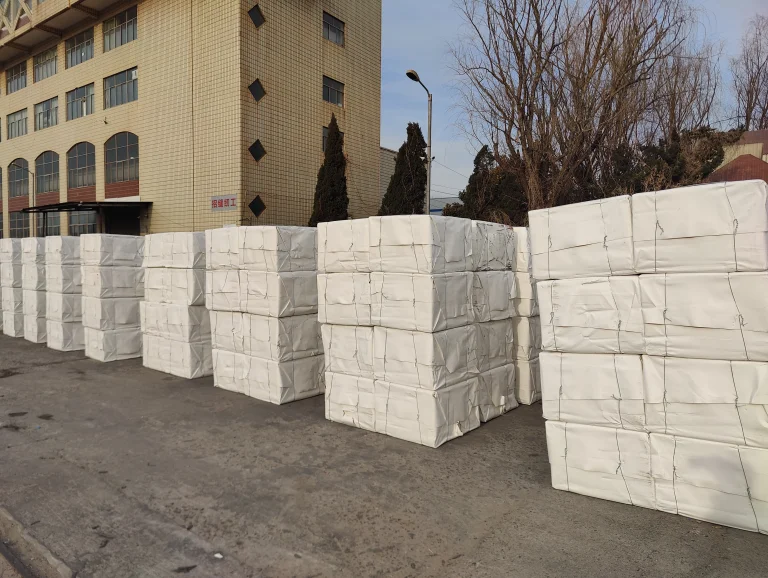
Bamboo paper is paper made wholly or partly from bamboo pulp, so buying it means choosing a pulp grade. Sheeon publishes bleached bamboo pulp at about 85% brightness with fibers longer than 1.7 mm, and unbleached at 40–43% brightness with fibers longer than 2.2 mm.
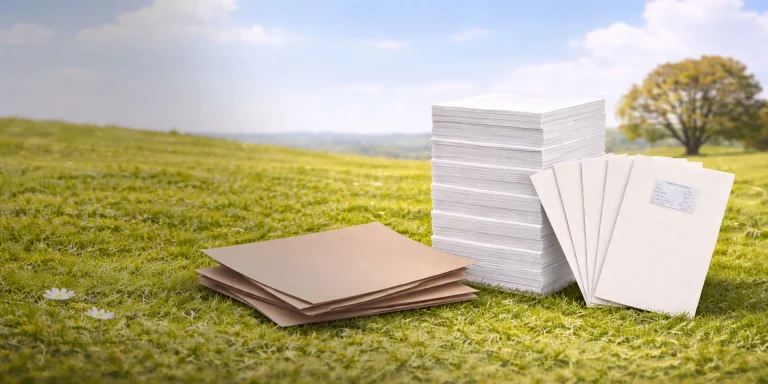
Bamboo paper is paper made wholly or partly from bamboo pulp, so buying it means choosing a pulp grade. Sheeon publishes bleached bamboo pulp at about 85% brightness with fibers longer than 1.7 mm, and unbleached at 40–43% brightness with fibers longer than 2.2 mm.