pulpe de bagasse
En savoir plus


 12:58
Pulpe de bagasse is fiber made from sugarcane bagasse, the residue left after juice extraction. Sheeon offers a bleached grade with brightness above 80% and an unbleached grade at 40–43%. Choose by brightness target, cleanliness limits and strength data, then verify certificates and test samples before committing to volume.
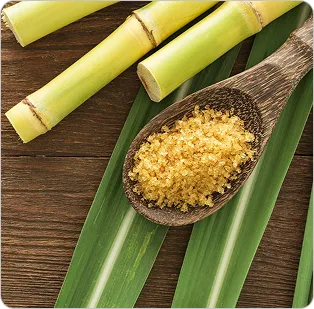
Bagasse de canne à sucre is the fibrous material that remains once the juice has been pressed out of the cane. Pulping it produces a non-wood fiber that paper and packaging manufacturers use as an alternative to conventional wood-pulp sourcing. You will see the same material listed as “sugarcane bagasse pulp” or “bagasse sugarcane pulp”; the raw material is identical.Sheeon sells two grades: bleached and unbleached. The choice between them drives most of the downstream decisions, so the next section puts them next to each other.
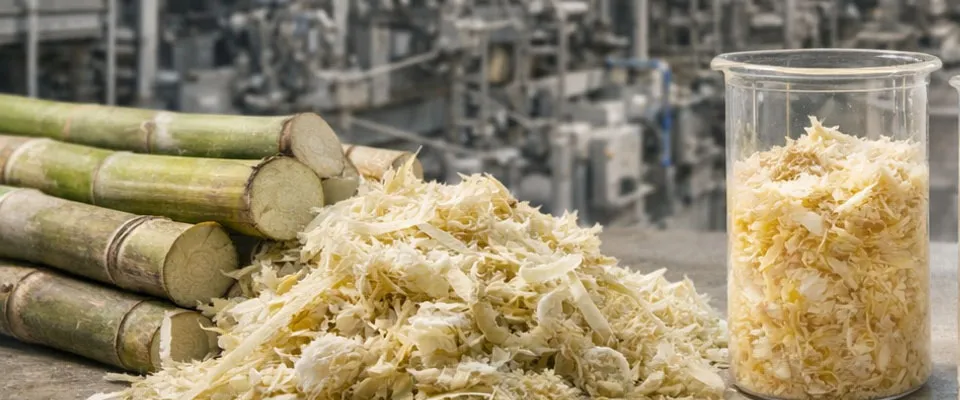
Le bleached grade is published at brightness above 80%. The unbleached grade sits at 40–43%. That single gap decides which product shade each can serve, and it is also where the published data diverges: the bleached grade comes with a full strength and chemistry profile, while the unbleached grade lists mostly physical and handling parameters.
Compared with the thin marketplace listings that dominate results for this term, the useful move for a mill is to read both grades against the same list of parameters. The table below does that.
| Paramètres | Pâte de bagasse blanchie | Pulpe de bagasse non blanchie |
| Luminosité | >80% | 40–43% |
| Teneur en impuretés, 0,3–5,0 mm² | < 35 mm²/500 g | < 40 mm²/500 g |
| Nombre de points de saleté, > 5,0 mm² | Aucun | Aucun |
| Indice de résistance à la traction | >55 N·m/g | Non publié |
| Indice de déchirement | >5,0 mN·m²/g | Non publié |
| Indice de rafale | >4.0 kPa·m²/g | Non publié |
| Viscosité | >550 cm³/g | Non publié |
| Poids humide de la fibre | >1.7 g | Non publié |
| Frêne | <0.7% | Non publié |
| Humidité | <15% | 14 ± 21 TP3T |
| pH | 6,5–8,0 | <8,0 |
| Degré de battement | 22°SR | 18°SR |
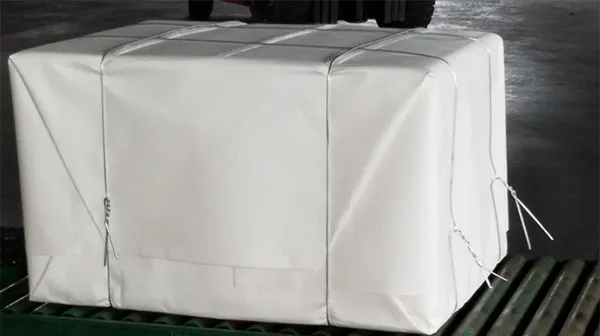
| 形式 | Sheet, 700 × 800 mm | Bale, 700 × 800 × 600 mm; 250 kg ADMT; basis weight 500–530 g/m² |
The bleached grade’s product page references GB/T 8940.2, GB/T 7974, GB/T 10740-1989, QB/T 3704, GB/T 1548, GB/T 742, GB/T 8944.1 and GB/T 3332-2004.In both cases, ask for the method behind each number before comparing against another supplier’s sheet.
Sheeon positions its pulp for paper, packaging and related applications, and its customers fall into paper manufacturing, packaging, molded fiber and disposable paper products.Brightness is the first filter: if your finished product needs a light shade, the unbleached grade at 40–43% is unlikely to meet it without bleaching, and if shade does not matter, paying for bleaching may not be necessary.
The second filter is strength. The bleached grade’s tensile, tear and burst indices are published; if you are considering the unbleached grade for a load-bearing product, request those figures before the trial, not after.
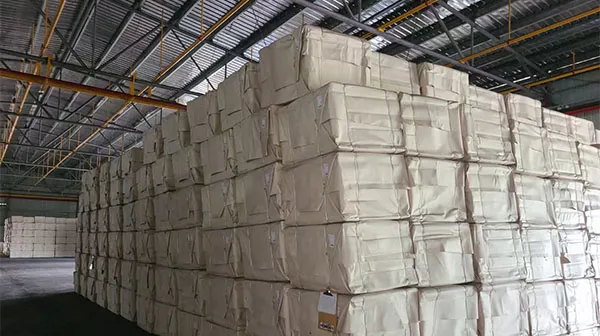
Pricing is available on request and depends on product grade, specification, order volume, packaging and delivery requirements. A quote is only comparable to another supplier’s if all five of those are stated the same way.
Quelle est la différence entre la pulpe de bagasse blanchie et la pulpe de bagasse non blanchie ?
Brightness is the headline gap: above 80% for the bleached grade, 40–43% for the unbleached. The grades also differ in dirt count limits (<35 vs <40 mm²/500 g), beating degree (22°SR vs 18°SR) and in how much strength data is published.
Does Sheeon publish strength data for unbleached bagasse pulp?
The published unbleached figures cover physical and handling parameters such as brightness, dirt count, moisture, pH, basis weight and bale size. Tensile, tear and burst indices are published for the bleached grade only, so request them for the unbleached grade before a trial.
Can the specification be customized?
Sheeon lists specification customization, bleaching options, packaging customization, private labeling, formulation development and sample development and testing among its services. Send your target parameters with the sample request.
How much does bagasse pulp cost?
Quotes depend on grade, specification, order volume, packaging and delivery terms.
Send your target brightness, dirt-count tolerance and handling format to Sheeon’s technical team to get a grade recommendation and samples. How bagasse compares with bamboo and wheat straw pulp on the same line is a separate question this guide does not cover.
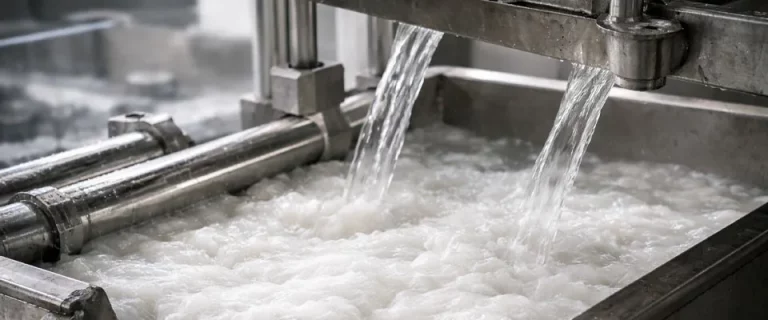
Bagasse pulp is fiber made from sugarcane bagasse, the residue left after juice extraction. Sheeon offers a bleached grade with brightness above 80% and an unbleached grade at 40–43%. Choose by brightness target, cleanliness limits and strength data, then verify certificates and test samples before committing to volume. What sugarcane bagasse pulp is Sugarcane bagasse […]

Bamboo paper is made from bamboo fiber; tree paper is made from wood pulp. Neither wins outright, because performance depends on the pulp grade. Sheeon’s bleached bamboo pulp publishes brightness near 85% and fiber length above 1.7 mm, which gives buyers fixed numbers to test any virgin wood pulp against. Where the fibers come from […]