polpa di bagassa
Per saperne di più


 09:06
09:06 Sheeon Pulp Technical Team | Technical Content Team | Published: August 26, 2026
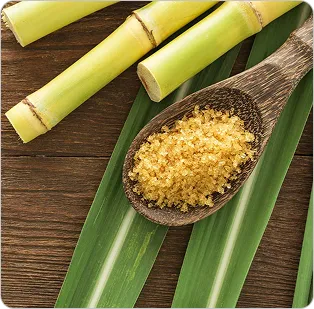
Polpa di bagassa is fiber pulp made from sugarcane bagasse, the fibrous residue left after juice extraction, processed into either a bleached grade (brightness >80%) for tableware and printing applications or an unbleached grade (brightness 40–43%) for bulk packaging and industrial uses.
Bagasse is a byproduct of sugarcane processing — the crushed stalk material remaining after sugar mills extract the juice. Rather than being discarded or burned as fuel, bagasse can be pulped into fiber suitable for paper, packaging and molded fiber products, giving buyers a non-wood alternative to conventional pulp sourcing. This matters most to manufacturers looking to diversify fiber supply away from wood pulp, either for cost, sustainability positioning or regional sourcing reasons.
Sheeon supplies bagasse pulp across more than 50 countries, with named long-term markets in Germany, Belgium, Spain, France and the Netherlands. That geographic spread reflects a fiber source with established international demand, not a niche or regional-only material.
The first sourcing decision for any bagasse pulp buyer is grade. Bleached and polpa di bagassa grezza differ substantially — not just in color, but in processing, beating degree and typical end use.
| Parametro | Polpa di bagassa sbiancata | Polpa di Bagasse non sbiancata |
| Luminosità | >80% | 40–43% |
| Contenuto di impurità, 0,3–5,0 mm² | <35 mm²/500 g | <40 mm²/500 g |
| Contenuto di impurità, >5,0 mm² | Nessuno | Nessuno |
| Indice di resistenza alla trazione | >55 N·m/g | — (not disclosed) |
| Grado di battitura | 22°SR | 18°SR |
| Umidità | <15% | 14 ± 21 TP3T |
| pH | 6,5–8,0 | <8,0 |
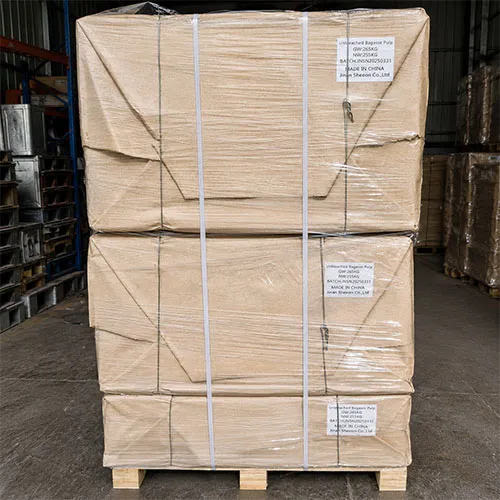
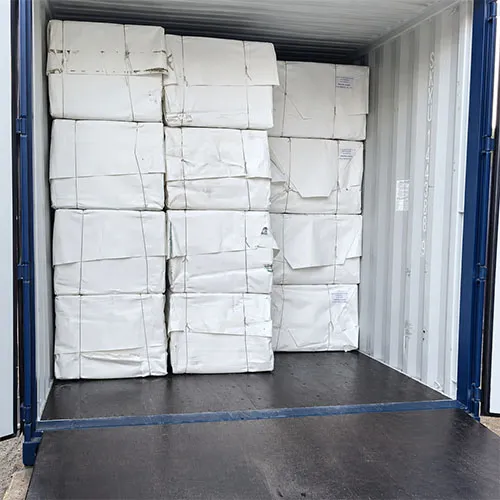
| Sheet/bale format | 700 × 800 mm sheet | 700 × 800 × 600 mm bale, 250 kg ADMT |
The unbleached grade’s lower beating degree (18°SR against 22°SR) means less fiber refining has already taken place, which typically translates into a lower per-ton cost and suits applications where surface whiteness isn’t a requirement — cushioning layers, non-visible packaging components, or as a blend input for mills doing their own further processing.
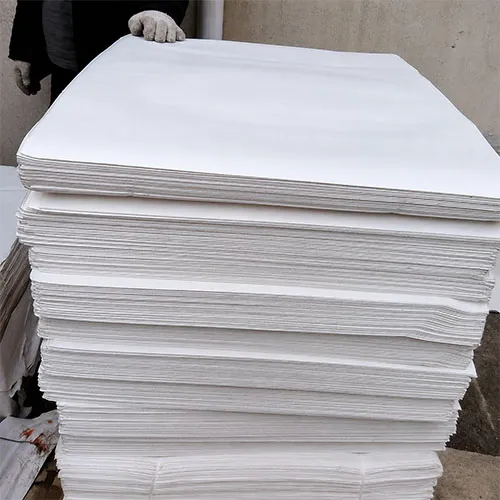
For manufacturers sourcing tableware-grade or printing-grade pulp, the complete published specification is:
| Parametro | Valore | Metodo di prova |
| Luminosità | >80% | GB/T 8940.2 |
| Contenuto di impurità, 0,3–5,0 mm² | <35 mm²/500 g | GB/T 7974 |
| Indice di resistenza alla trazione | >55 N·m/g | GB/T 10740-1989 |
| Indice di lacerazione | >5,0 mN·m²/g | QB/T 3704 |
| Indice di burst | >4,0 kPa·m²/g | GB/T 1548 |
| Viscosità | >550 cm³/g | GB/T 742 |
| Peso umido della fibra | >1,7 g | GB/T 8944.1 |
| Cenere | <0,7% | GB/T 3332-2004 |
| Parametro | Valore |
| Luminosità | 40–43% |
| Contenuto di impurità, 0,3–5,0 mm² | <40 mm²/500 g |
| Grammatura | 500–530 g/m² |
| Peso del fardello | 250 kg ADMT |
| Umidità | 14 ± 21 TP3T |
| pH | <8,0 |
| Grado di battitura | 18°SR |
Note the gap here: tensile, tear and burst index figures are published for the bleached grade but not disclosed for unbleached on the reviewed pages. Mills evaluating polpa di bagassa grezza for strength-dependent applications should request these figures directly rather than assume parity with the bleached grade.
Molded fiber tableware. Polpa di bagassa sbiancata‘s brightness above 80% avoids a secondary whitening step, and its tensile index above 55 N·m/g and burst index above 4.0 kPa·m²/g support the pressing and forming process without excessive rim cracking.
Industrial and bulk packaging. Unbleached bagasse pulp’s lower processing cost and 250 kg ADMT bale format suit cushioning, trays and non-visible packaging layers where whiteness adds no functional value.
Printing and specialty paper. Bleached bagasse pulp’s ash content under 0.7% and moisture under 15% keep mineral residue and drying variability low, relevant for mills blending it into printing-grade furnish.
Paper mill furnish blending. Mills incorporating bagasse pulp into a broader fiber mix weigh tensile index, tear index and viscosity more heavily than sheet format, since these determine compatibility with existing wood or other alternative-fiber stock in the blend.
One issue that surfaces after order confirmation rather than before it: mills sometimes order bleached bagasse pulp assuming it will behave identically to unbleached stock once re-pulped into a blend, since both start from the same raw material. It doesn’t. The higher beating degree on the bleached grade (22°SR against 18°SR) means it arrives already more refined, which changes how it responds in a mill’s own beater or refiner compared to unbleached stock. Running both grades through an identical downstream process without adjusting refining time can produce inconsistent furnish results — this is a processing variable to test in a trial run, not something to assume matches across grades.
Polpa di bagassa product pages carry CE, FDA-related food-contact and SGS verification claims. None of the reviewed pages disclose certificate numbers, issuing bodies or validity dates for these claims at the individual product level.
This is worth taking seriously for tableware and food-packaging buyers specifically. CE marking indicates conformity with applicable EU harmonisation legislation — it is not, on its own, a food-contact certificate. Food-contact material compliance in the EU market is governed separately under Regulation (EC) No 1935/2004. Before finalizing an order for food-contact applications, request the specific test report or declaration of conformity that matches the exact bagasse pulp grade and lot — a website claim is a starting point for the conversation, not the documentation itself.
No fixed price list is published for bagasse pulp. Pricing depends on grade (bleached or unbleached), specification, order volume, packaging and delivery requirements. Buyers should expect to submit tonnage, grade and delivery terms to receive a quote rather than compare a published per-ton figure across suppliers — this is standard for the category rather than a gap specific to any one supplier.
What bagasse pulp offers buyers diversifying fiber supply:
What buyers should factor in before switching sourcing:
A: Brightness is the most visible difference — >80% for bleached against 40–43% for unbleached — but beating degree (22°SR vs. 18°SR) and typical end use (tableware/printing vs. bulk packaging) matter just as much for a sourcing decision.
A: Sheeon’s product pages carry FDA-related food-contact and CE claims, but certificate numbers and issuing bodies aren’t disclosed. Request the specific documentation matched to your grade and lot before relying on the claim for a food-contact order.
A: These figures aren’t published for the unbleached grade on the reviewed pages. Buyers needing strength data for unbleached stock should request it directly from the supplier.
A: No published price list exists. Pricing depends on grade, specification, order volume, packaging and delivery terms, confirmed through a direct quote request.
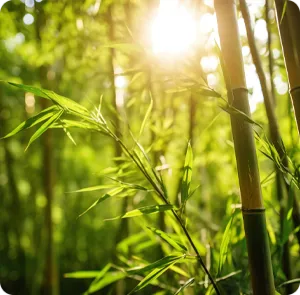
La carta di bambù è una carta prodotta interamente o in parte con polpa di bambù, quindi acquistarla significa scegliere un tipo di polpa. Sheeon produce pasta di bambù sbiancata con una luminosità di circa 85% e fibre di lunghezza superiore a 1,7 mm, e pasta non sbiancata con una luminosità compresa tra 40 e 43% e fibre di lunghezza superiore a 2,2 mm.

La carta di bambù è una carta prodotta interamente o in parte con polpa di bambù, quindi acquistarla significa scegliere un tipo di polpa. Sheeon produce pasta di bambù sbiancata con una luminosità di circa 85% e fibre di lunghezza superiore a 1,7 mm, e pasta non sbiancata con una luminosità compresa tra 40 e 43% e fibre di lunghezza superiore a 2,2 mm.