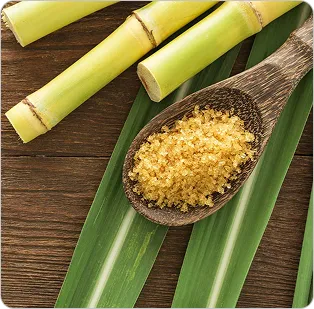
küspe posası
Daha Fazla Bilgi


 11:55
11:55 Plastic packaging is under pressure, but buyers still need strong, safe, and cost-stable paper products. If your raw material choice is wrong, production waste rises fast. Bagasse paper offers a smarter way to turn sugarcane residue into useful pulp and packaging.
Bagasse kağıdı, şeker kamışından meyve suyu çıkarıldıktan sonra geriye kalan lifli artık olan bagasse’den üretilen kağıttır. Temizleme, kabuk soyma, hamur haline getirme, arıtma ve kağıt üretim aşamalarıyla şeker kamışı bagasse’si, ambalaj kağıdı, kalıplanmış elyaf ürünleri, sofra takımları, bagasse kağıt ürünleri ve diğer sürdürülebilir kağıt uygulamaları için hamur haline getirilebilir.
Bagasse paper is paper made from bagasse, the dry fiber left after a sugar mill extracts sugarcane juice. FAO defines bagasse as the fibrous residue left after extraction of juice from sugarcane, and notes that agricultural residues have strong promise for the pulp and paper industry.
In simple terms, sugarcane gives us sugar first. Then the leftover sugarcane bagasse can be cleaned and processed into pulp. That pulp can become bagasse paper, bagasse paper products, molded pulp packaging, paperboard, and sometimes blended paper products.
This matters because bagasse is a by-product of sugarcane. Instead of treating it only as fuel or waste, manufacturers can convert bagasse into paper. That creates more value from the same crop and supports a cleaner raw material story for packaging brands, paper manufacturers, and eco-friendly product buyers.
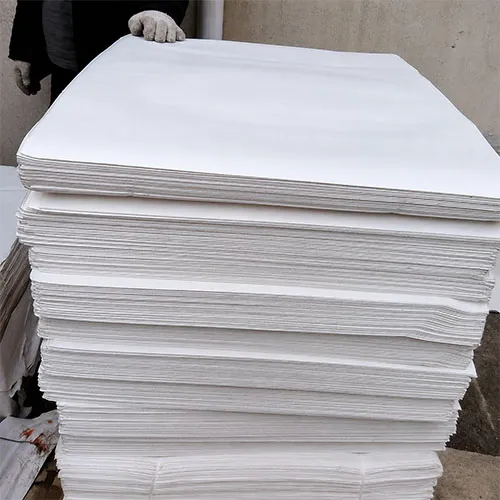
Sugarcane bagasse is useful because it contains fiber. That fiber can be separated, cleaned, and refined into pulp. FAO also lists bagasse as pulp obtained from residue from processing sugar cane, which confirms its place as a recognized non-wood fiber source in pulp and paper definitions.
For the paper industry, this is important. Traditional wood pulp still plays a major role in global paper production, but many buyers now want fiber from agricultural residues. Bagasse pulp helps reduce dependence on forest-based fiber when the final product and production process are suitable.
The use of sugarcane bagasse also fits circular economy thinking. Sugarcane production creates a large amount of residue after juice extraction. A modern bagasse paper mill can use this residue to produce paper pulp, which can then become packaging, tableware, or paper and paperboard products.
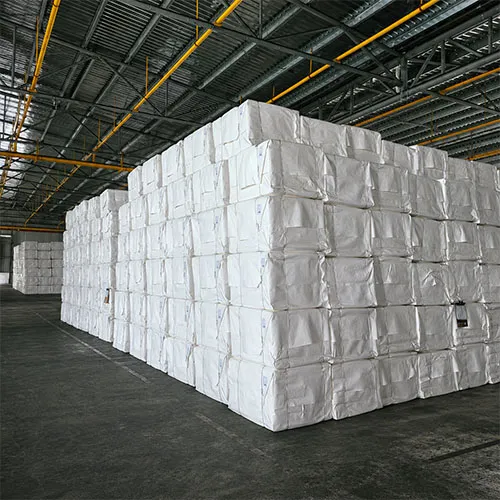
For Sheeon Pulp, bagasse pulp is a core non-wood pulp material. It helps B2B buyers source more sustainable paper materials without ignoring factory needs such as quality, supply stability, and export support.
Bagasse fiber must be prepared before it can become pulp. Fresh or wet bagasse usually contains pith, dust, sugar residue, and non-fiber material. The first key step is cleaning and depithing. Depithing removes soft pith cells in bagasse and helps improve pulp quality.
After depithing, the treated bagasse enters the pulping process. Heat, water, chemicals, and mechanical action help separate usable fiber from unwanted material. In many systems, bagasse is cooked and washed before refining. The goal is simple: turn sugar cane bagasse into clean pulp fibers that can form a sheet.
A basic bagasse processing flow looks like this:
Sugarcane Harvest
↓
Juice Extraction at Sugar Mill
↓
Sugarcane Bagasse
↓
Depithing and Cleaning
↓
Kağıt Hamuru
↓
Yıkama ve Eleme
↓
Refining Pulp from Bagasse
↓
Paper Machine or Pulp Board
↓
Bagasse Paper / Packaging / Tableware
Bagasse pulp production is not only about fiber separation. A good supplier must control moisture, dirt count, fiber length, brightness, drainage, and packaging. If the pulp is poorly processed, a paper mill may face weak sheets, unstable color, or higher rejects.
The properties of sugarcane bagasse come from its plant structure. Bagasse contains cellulose, hemicellulose, lignin, pith, and mineral content. Bagasse cellulose is the most valuable part for paper pulp because it helps form fiber networks in paper.
The properties of bagasse can make it suitable for paper from bagasse, molded pulp, and packaging. Review literature on molded pulp for food packaging notes that wood fiber, bamboo fiber, bagasse fiber, crop straw fiber, and other plant fibers can be used as fiber sources for molded pulp.
Still, bagasse is not perfect. Silica in bagasse, pith cells, and impurities may affect paper manufacturing if not controlled. Bagasse silica and ash can influence chemical recovery of bagasse-based systems. This is why cleaning, depithing, and washing matter so much.
Key properties buyers should evaluate:
In B2B sourcing, buyers should ask for technical specifications, not only a product name.
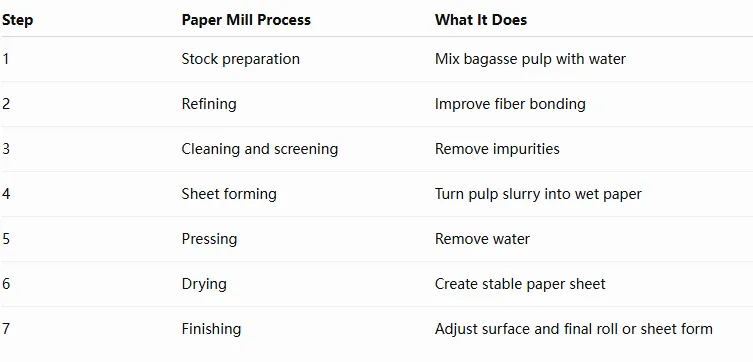
To make paper, a paper mill mixes pulp with water to create a fiber slurry. The slurry is cleaned, refined, formed on a paper machine, pressed, dried, and finished. This is the same basic logic used in many paper making process lines.
When producing paper from bagasse, the mill may use bagasse pulp alone or blend it with wood pulp, bamboo pulp, or recycled paper pulp. The blend depends on the target paper product. A mill making packaging paper may focus on strength. A mill making graphic paper may focus on smoothness, brightness, and printability.
Here is a simple process table:
Some buyers ask whether newsprint from bagasse or quality graphic paper from bagasse is possible. Technically, bagasse can be used in several paper grades, but final results depend on pulp quality, machine design, refining, and blend formula. In commercial production, testing is always necessary.
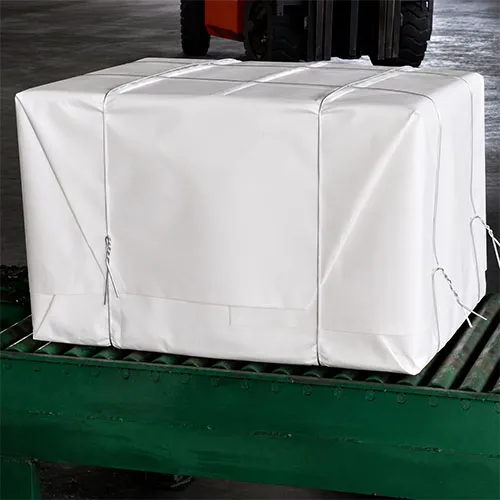
Bagasse paper can be used in many product directions. The most common commercial interest today is packaging and molded pulp. Reviews of molded pulp fibers for disposable food packaging state that bagasse, wheat, and bamboo fibers are replacing wood fibers in food packaging applications because of factors such as cost-effectiveness, availability, and rapid renewability.
Common bagasse paper products include:
Bagasse paper products work well when the product design matches the fiber. A molded tray has different needs from a printing sheet. A food container has different needs from kraft paper. This is why Sheeon Pulp normally starts with the buyer’s application before recommending bagasse pulp.
For example, a disposable tableware producer may ask for bagasse pulp sheet, bagasse pulp sheet price, or sugarcane bagasse pulp sheet price. A paper manufacturer may ask for paper pulp, bagasse paper, or pulp for paper production. The search words differ, but the real need is the same: stable fiber, stable quality, and stable supply.
Bagasse paper is not always “better” than traditional wood-based paper. It is better for certain goals. If your goal is to use agricultural residue, reduce reliance on wood pulp, and build a stronger eco-friendly story, bagasse paper is attractive. If your goal is maximum standardization across all paper grades, wood pulp may still be easier to manage.
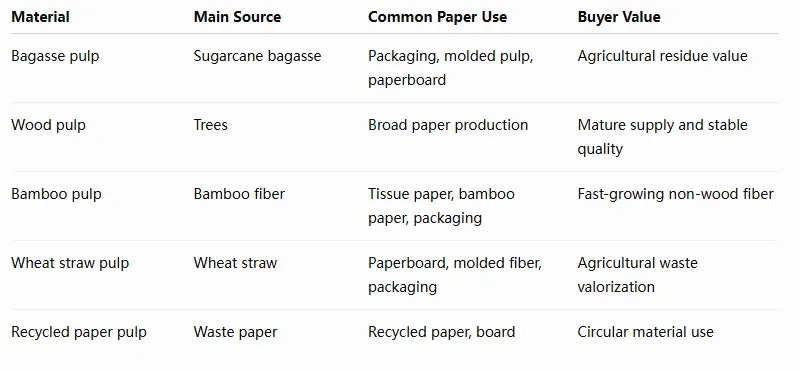
Traditional wood-based paper benefits from a mature global supply chain. Wood pulp is highly standardized, widely traded, and suitable for many grades. Bagasse pulp offers a different value: it uses sugarcane bagasse, a by-product of sugarcane, and converts it into a useful material for paper.
A practical comparison:
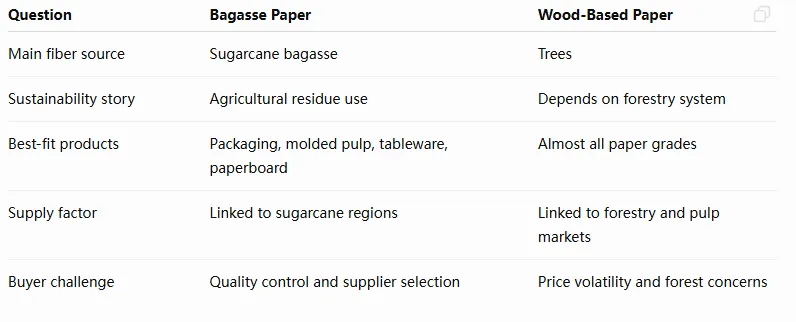
The better question is not “bagasse or wood?” The better question is: which pulp creates the right balance of cost, performance, sustainability, and customer acceptance?
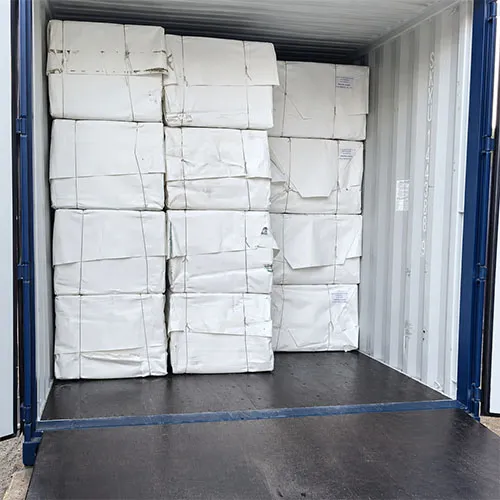
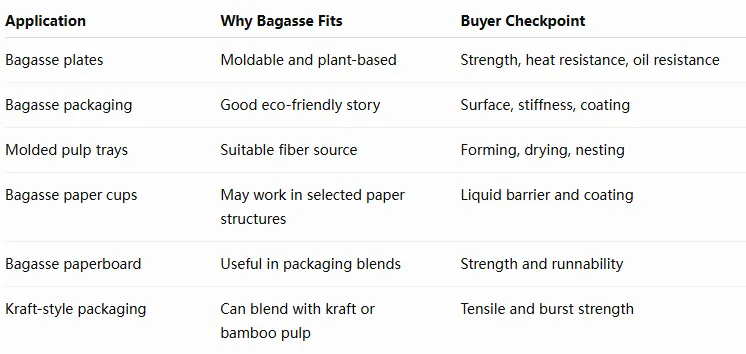
The application of bagasse is especially strong in packaging and food service products. Bagasse can be used for molded trays, clamshell boxes, plates, bowls, cup lids, protective inserts, and other molded pulp packaging. A state-of-the-art review on molded pulp food packaging describes molded pulp as a material class with advantages over single-use plastics and bioplastics, and identifies bagasse as one of the fiber sources used in disposable food packaging.
The use of sugarcane bagasse in these products is easy for buyers to understand. Sugarcane residue becomes paper pulp. Paper pulp becomes molded packaging. Molded packaging can replace some plastic packaging. Simple. Strong. Commercial.
For food packaging, buyers should still confirm real requirements. Bagasse packaging may need oil resistance, water resistance, heat resistance, coating, strength, and food-contact compliance. The fiber is only one part of the final product. Product design and processing matter too.
Application map:
This is where Sheeon Pulp can help. We do not only supply pulp. We help buyers choose suitable pulp for packaging, tableware, and paper products.
Bagasse pulp has many advantages, but buyers should know the challenges. First, untreated bagasse is not ready for paper production. It must be cleaned, depithed, cooked, washed, and screened. If whole bagasse enters the process without proper preparation, pith and impurities can reduce quality.
Second, bagasse processing must control silica, ash, moisture, and fiber strength. A paper and pulp factory may need to adjust refining, drainage, and stock preparation. The pulp and the treated bagasse must match the buyer’s machine conditions. Technology for bagasse production has improved, but each paper mill still needs testing.
Third, price is not the whole story. A low bagasse pulp price may become expensive if the pulp causes machine downtime or weak products. Buyers should review samples, specifications, and application fit.
Buyer checklist before purchasing bagasse pulp:
A careful buyer tests first. That small step can prevent large production losses.
The future of bagasse paper looks promising because brands, retailers, and manufacturers are moving toward sustainable packaging and lower-plastic material choices. Research and industry reviews continue to show interest in agricultural fibers, molded pulp, and non-wood fiber systems for packaging and paper products.
Modern bagasse paper will not replace every kind of paper. That is not the point. Its future is strongest where sugarcane bagasse can solve a real buyer problem: packaging sustainability, molded fiber performance, agricultural waste use, and fiber supply diversity.
For Sheeon Pulp, the future of bagasse paper is practical, not just idealistic. We see demand from food packaging producers, disposable tableware factories, eco-friendly material brands, paper importers, and industrial raw material purchasers. These buyers want more than a green label. They want stable pulp, clear specifications, customization support, and export-ready service.
In short: bagasse could be developed further where sugarcane regions, pulp technology, buyer demand, and paper manufacturing capacity meet.
Bagasse paper is paper made from bagasse, the fibrous residue left after sugarcane juice extraction. The bagasse is cleaned, pulped, refined, and formed into paper, paperboard, or molded pulp products.
Sugarcane bagasse is used for fuel, cogeneration in sugarcane industries, pulp and paper production, molded packaging, bagasse paper products, tableware, board, and other bio-based materials.
Sugarcane bagasse can be eco-friendly because it uses agricultural residue instead of relying only on wood fiber. Its true environmental value depends on sourcing, pulping, wastewater control, transport, coating, and end-of-life design.
Yes. Bagasse can be used to make paper after cleaning, depithing, pulping, washing, screening, refining, and sheet forming. Paper from bagasse can be used in packaging, paperboard, molded pulp, and selected paper grades.
The properties of sugarcane bagasse include usable cellulose fiber, pith content, moisture, ash, silica, and fiber bonding potential. These properties affect pulp quality, paper strength, drainage, and final product performance.
Bagasse paper itself is not fully waterproof unless it is specially treated, coated, or designed for water resistance. Molded bagasse packaging may need coatings or additives for liquid, oil, or heat resistance.
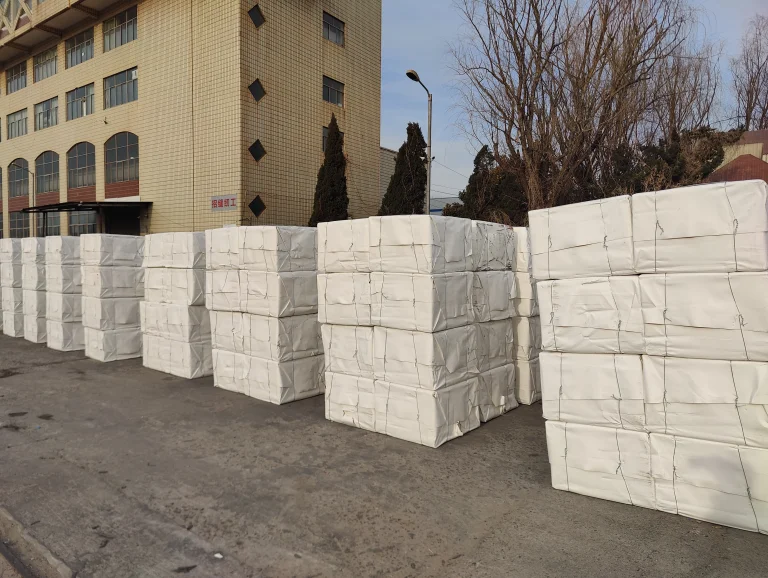
Bambu kağıdı, tamamen veya kısmen bambu hamurundan üretilen bir kağıt türüdür; dolayısıyla bu ürünü satın almak, bir hamur kalitesini seçmek anlamına gelir. Sheeon, lif uzunluğu 1,7 mm'den uzun olan ve parlaklığı yaklaşık 85% olan ağartılmış bambu hamuru ile lif uzunluğu 2,2 mm'den uzun olan ve parlaklığı 40–43% arasında değişen ağartılmamış bambu hamuru üretmektedir.
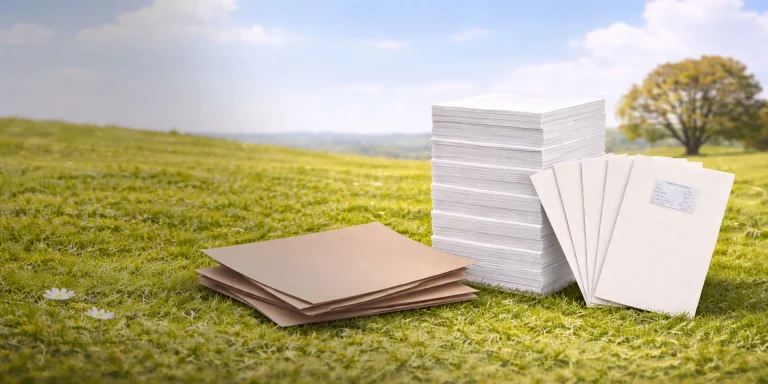
Bambu kağıdı, tamamen veya kısmen bambu hamurundan üretilen bir kağıt türüdür; dolayısıyla bu ürünü satın almak, bir hamur kalitesini seçmek anlamına gelir. Sheeon, lif uzunluğu 1,7 mm'den uzun olan ve parlaklığı yaklaşık 85% olan ağartılmış bambu hamuru ile lif uzunluğu 2,2 mm'den uzun olan ve parlaklığı 40–43% arasında değişen ağartılmamış bambu hamuru üretmektedir.