bột bã mía
Tìm hiểu thêm


 08:58
08:58 Choosing bột bã mía for paper or molded fiber production starts with the specifications your line can accept. Brightness affects appearance; dirt count affects visible defects; moisture, beating degree and delivery format affect receiving and processing. A product description that says only “sugarcane pulp” cannot answer those purchasing questions.
This guide compares Sheeon’s published specifications for bleached and unbleached sugarcane bagasse pulp. Use the figures to shortlist a grade, then request a current specification sheet and lot-specific test results before writing limits into a purchase order.
| Specification | Bleached bagasse pulp | Bột giấy bã mía chưa tẩy trắng |
| Độ sáng | >80% | 40–43% |
| Lượng bụi, 0,3–5,0 mm² | <35 mm²/500 g | <40 mm²/500 g |
| Số lượng tạp chất, >5,0 mm² | None specified | None specified |
| Mức độ đánh | 22° vĩ độ Nam | 18° vĩ độ Nam |
| Độ ẩm | <15% | 14 ± 21 TP3T |
| Published format | 700 × 800 mm sheets | 250 kg ADMT bales |
| Published bale dimensions | Not stated | 700 × 800 × 600 mm |
| Published strength figures | Tensile, tear and burst indices listed below | Not stated in the supplied specifications |
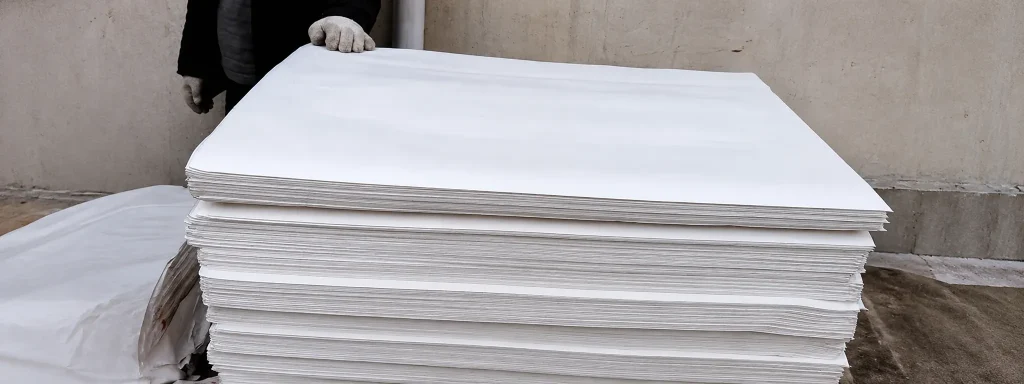
The following figures describe the published bleached grade. A published range is a starting point for an RFQ; confirm the current grade specification and the test method used for each contract-critical value.
| Tham số | Published specification | Method or verification note |
| Độ sáng | >80% | GB/T 7974 listed in the supplied material; confirm the complete measurement procedure |
| Lượng bụi, 0,3–5,0 mm² | <35 mm²/500 g | GB/T 1548 listed in the supplied material |
| Số lượng tạp chất, >5,0 mm² | Không có | Confirm the inspection and reporting criteria |
| Chỉ số độ bền kéo | >55 N·m/g | Request the actual strength test method and report |
| Chỉ số độ rách | >5,0 mN·m²/g | Request the actual strength test method and report |
| Chỉ số bùng nổ | >4,0 kPa·m²/g | Request the actual strength test method and report |
| Độ nhớt | >550 cm³/g | GB/T 10740-1989 listed in the supplied material; verify current applicability |
| Trọng lượng ướt của sợi | >1,7 g | QB/T 3704 listed in the supplied material |
| Tro | <0,7% | GB/T 742 listed in the supplied material |
| Độ ẩm | <15% | GB/T 8944.1 listed in the supplied material |
| pH | 6,5–8,0 | GB/T 3332-2004 listed in the supplied material; verify current applicability |
| Kích thước tờ giấy | 700 × 800 mm | Confirm packing configuration |
| Mức độ đánh | 22° vĩ độ Nam | Request the measured value and method for the supplied lot |
For a buyer comparing bagasse pulp sheets, the sheet dimensions alone do not establish shipment weight or container capacity. Request the sheets per bale or pack, bale weight, wrapping details and loading plan with the quotation.
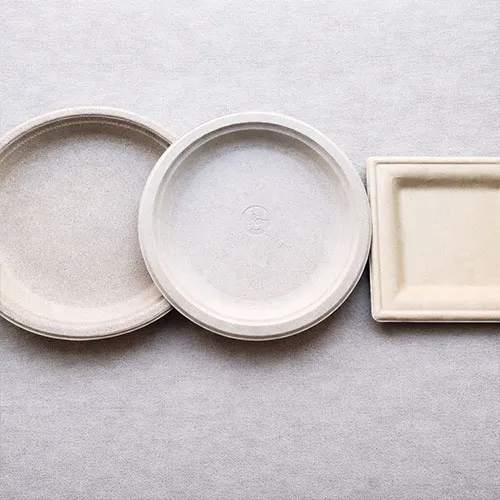
Unbleached pulp is an option when a white finished surface is not required. Its suitability for a particular molded fiber or paper product still depends on trial results, the process formulation and the finished product’s performance requirements.
| Tham số | Published specification |
| Độ sáng | 40–43% |
| Lượng bụi, 0,3–5,0 mm² | <40 mm²/500 g |
| Số lượng tạp chất, >5,0 mm² | Không có |
| Trọng lượng cơ bản | 500–530 g/m² |
| Trọng lượng kiện | 250 kg ADMT |
| Độ ẩm | 14 ± 21 TP3T |
| pH | <8,0 |
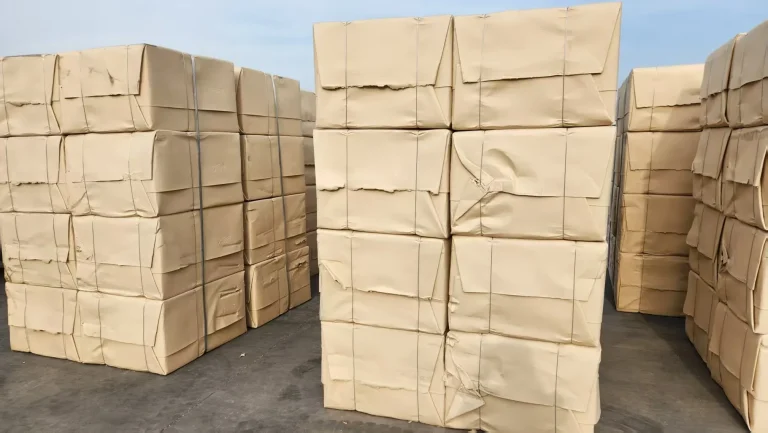
| Bale dimensions | 700 × 800 × 600 mm |
| Mức độ đánh | 18° vĩ độ Nam |
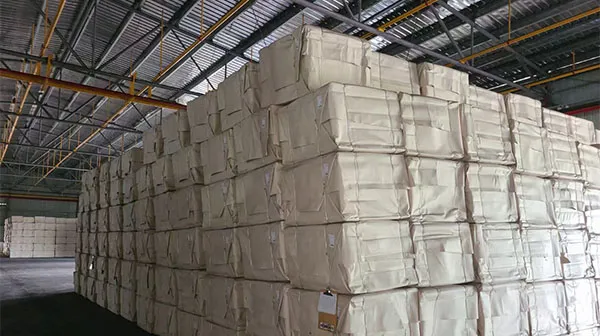
Consider the bleached grade when the intended sheet or molded product needs a lighter appearance. Its published brightness is above 80%, and the supplied specification includes tensile, tear and burst figures. Confirm appearance, strength and processing behavior on your own equipment before approving a production order.
Consider the unbleached grade when the natural fiber color is acceptable and your process can work with its published 18°SR beating degree. The specification provides bale dimensions and a nominal bale weight, which are useful for planning receiving and handling. Request strength data if your end product has load-bearing or stacking requirements.
Bột bã mía can be evaluated as a fiber input for molded pulp packaging and paper products, including applications such as trays, protective inserts, plates or cups. These are potential downstream uses, not a claim that a given pulp grade is automatically suitable for every finished product or food-contact condition.
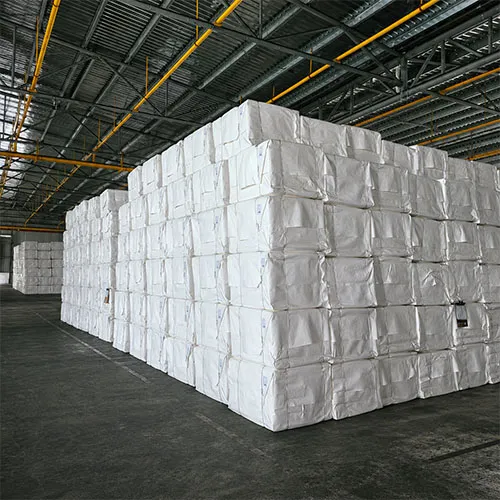
Dirt count: Put both particle-size bands in the RFQ. The published limits are expressed as total dirt area per 500 g for particles from 0.3 to 5.0 mm², with “none” stated for particles above 5.0 mm². Ask how samples are taken and how “none” is verified; a general promise of “low dirt” is too vague for acceptance testing.
Brightness: Set a brightness requirement only after deciding what the finished surface needs to look like. Brightness is an optical property. It does not replace tensile, tear, burst or finished-product testing.
Beating degree: The published values are 22°SR for bleached pulp and 18°SR for unbleached pulp. Ask for the measurement method and lot result, then assess whether the pulp fits your refining and forming process. A difference in °SR alone does not predict finished-product performance.
Before confirming a bulk order, request:
If the finished product will contact food, do not treat a general “CE,” “FDA” or “SGS” statement as proof that the purchased pulp or the final molded article is compliant. EU food-contact materials fall under the framework of Regulation (EC) No 1935/2004; CE marking applies only where specific EU harmonisation rules require it. In the US, the scope of a food-contact authorization depends on the applicable authorization route and intended use. Request documents that identify the material, tested conditions and scope, then assess the finished article where required.
A reliable bagasse pulp price comparison needs more than a price per kilogram. No current public price range is provided for these grades, so request a quotation against a defined purchasing specification.
Send Sheeon the following details to obtain a more useful quote:
| RFQ detail | What to provide |
| Grade | Bleached or unbleached bagasse pulp |
| Application | Paper, molded fiber packaging or another intended use |
| Key limits | Brightness, dirt count, moisture and required strength values |
| Trial requirement | Sample quantity and the tests you plan to run |
| Order volume | Trial volume and expected bulk volume |
| Delivery | Destination and requested Incoterm |
| Documentation | Test report, packing list and any application-specific compliance documents |
Request a grade-specific quote: Share your target specifications and destination with Sheeon’s sales team. Ask for the current specification sheet, sample availability, packing details and a quotation on the same weight and delivery basis you will use to compare suppliers.
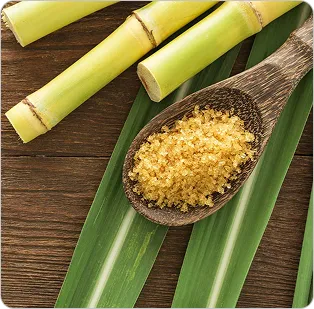
In this sourcing context, bagasse pulp refers to pulp made from sugarcane bagasse. Buyers also search for it as sugarcane pulp or sugarcane bagasse pulp. A purchase specification should identify the actual grade and measured properties rather than rely on the product name alone.
The published bleached grade has brightness above 80%, a 22°SR beating degree and a 0.3–5.0 mm² dirt-count limit below 35 mm²/500 g. The unbleached grade lists 40–43% brightness, 18°SR and a limit below 40 mm²/500 g for the same dirt band. Their published packing formats also differ.
Bagasse pulp may be evaluated for molded fiber products such as plates and packaging. Whether a particular grade works depends on forming trials, the complete product formulation, required performance and any applicable food-contact requirements.
The supplied bleached specification lists tensile, tear and burst indices, while the unbleached specification supplied here does not. The available figures therefore do not support a direct strength comparison. Request reports produced under comparable methods and conditions.
There is no published price per kilogram for either grade in the supplied material. Ask for a quotation specifying grade, quantity, weight basis, packaging, destination and delivery terms so offers can be compared fairly.
Sample development and technical support are described as available capabilities. Confirm sample availability, quantity, cost and the accompanying test documents directly when sending your inquiry.
Choosing bagasse pulp for paper or molded fiber production starts with the specifications your line can accept. Brightness affects appearance; dirt count affects visible defects; moisture, beating degree and delivery format affect receiving and processing. A product description that says only “sugarcane pulp” cannot answer those purchasing questions. This guide compares Sheeon’s published specifications for […]
Bã mía là chất thải dạng xơ còn lại sau khi thân cây mía được ép để chiết xuất nước mía. Giống như bất kỳ vật liệu lignocellulose nào, bã mía chủ yếu bao gồm cellulose, hemicellulose và lignin, cùng với một phần ruột không xơ có tính chất khác biệt so với phần xơ trong quá trình chế biến; chính vì lý do này, thành phần của bã mía thô là yếu tố quan trọng cần được xem xét trước khi nó bước vào giai đoạn nghiền bột giấy.