bột bã mía
Tìm hiểu thêm


 09:49
09:49 Sheeon Pulp Technical Team | Corporate Technical Team | Published: September 2026
Bamboo pulping is the industrial process that converts bamboo into paper-grade fiber for bamboo paper, tissue, printing paper, packaging paper, molded fiber products, and other applications in the pulp and paper industry. For buyers asking how bamboo pulp is made, the process involves much more than simply cutting bamboo and cooking it.
Commercial bamboo pulp production normally includes raw-material preparation, cooking, washing, screening, optional bleaching, pulp conditioning or refining where required, and forming or drying for shipment. These stages turn bamboo from a plant-based raw material for paper making into usable bamboo pulp for paper production.
The exact manufacturing process of bamboo pulp varies by bamboo species, mill design, chemical recovery system, target grade, and final application. A mill producing bleached bamboo pulp for tissue or printing paper, for example, may use a different process window from a mill supplying natural-color pulp for packaging.
What follows breaks the bamboo pulp making process into the main stages, explains what happens at each stage, and shows which specifications a B2B buyer should verify before purchasing pulp for commercial production.
The process begins with bamboo raw material. Suitable bamboo culms are harvested, transported, cleaned where necessary, and prepared for pulping. Bamboo is increasingly studied as a non-wood fibrous raw material for the pulp and paper industry because it can provide useful papermaking fibers and offers another fiber source alongside conventional wood-based raw materials. A 2024 review describes bamboo as an important potential non-wood raw material for pulp and paper applications.
The harvested bamboo is reduced into chips of a controlled size. This stage may look simple, but chip preparation has a direct effect on the next part of the bamboo pulping process. Cooking liquor must penetrate the bamboo material evenly. Very large pieces may cook unevenly, while excessive fines can behave differently during impregnation and chemical cooking.
For paper mills and bamboo paper manufacturers, consistency starts here. Poor raw-material preparation can later appear as rejects, shives, uneven delignification, dirt, or variation in pulp quality.
What gets checked: Chip size distribution, cleanliness, unwanted foreign material, moisture condition, and raw-material consistency. Oversized pieces can be reprocessed, while unsuitable fines or contaminants may be separated before cooking.
The bamboo species and raw material also matter. Research has shown that bamboo fiber dimensions and chemical composition vary among species, meaning not every bamboo source behaves identically during paper pulp manufacturing.
For B2B buyers comparing virgin bamboo pulp sources, this is one reason a specification sheet is more useful than a simple claim that the pulp is “100% bamboo.”
The prepared bamboo chips enter the chemical pulping process. In conventional chemical bamboo pulping, kraft and soda processes are two important routes that have been investigated and used for bamboo fiber separation. Research comparing soda and kraft pulping confirms that both methods can be applied to bamboo, although pulp yield, delignification, fiber properties, and the best cooking conditions depend on the raw material and operating parameters.
During cooking, alkaline chemicals, heat, time, and pressure help break down lignin and release cellulose-rich fibers. Lignin is part of the natural plant structure that helps bind fibers together. Removing enough lignin allows the bamboo fibers to separate and become useful bamboo pulp fiber.
The chemical treatment must be carefully controlled. The goal is not to remove everything from the bamboo. The mill needs enough delignification to create clean, separable fibers while avoiding unnecessary cellulose degradation.
That balance influences:
For buyers comparing bamboo pulp prices, cooking efficiency is one of many upstream variables that can affect manufacturing cost. Bột tre price should therefore be compared together with grade, brightness, cleanliness, fiber properties, moisture, and application performance rather than as a price-per-ton figure alone.
What gets checked: Cooking temperature, chemical charge, cooking time, screened yield, rejects, and Kappa number.
The Kappa number is commonly used as an indication of the degree of delignification and bleachability of chemical pulp. ISO 302 specifies a method for determining pulp Kappa number and notes that the relationship between Kappa number and actual lignin content is not identical for every pulp type and pulping process.
An undercooked batch may contain knots, shives, or fiber bundles that are difficult to separate. Excessive cooking, however, can reduce pulp viscosity, yield, and fiber strength.
| Factor | Kraft (Sulfate) Process | Soda Process |
| Main Cooking Chemicals | Sodium hydroxide and sodium sulfide | Mainly sodium hydroxide |
| Sulfur Compounds | Present | Sulfur-free cooking chemistry |
| Fiber Performance | Can produce strong chemical pulp when correctly optimized | Performance depends strongly on bamboo species and cooking conditions |
| Delignification | Effective chemical pulping route | Also widely studied and applicable to bamboo |
| Process Control | Chemical charge, sulfidity, temperature, time, and Kappa number | Alkali charge, temperature, time, and Kappa number |
| Possible Applications | Printing paper, tissue furnish, packaging, and other bamboo pulp paper grades | Paper, packaging, and other bamboo pulp applications |
| Buyer Concerns | Strength, odor control, chemical recovery, and process consistency | Yield, delignification, fiber properties, and process consistency |
It is important not to assume automatically that one method always produces “better” bamboo pulp. Studies show that bamboo pulp properties can change significantly with pulping method, cooking conditions, bleaching, refining, and even bamboo species.
For an industrial purchaser, the better question is: Does the finished pulp meet the requirements of my paper machine and final bamboo paper product?
After cooking, the pulp is mixed with spent cooking liquor containing dissolved lignin, degraded organic material, residual chemicals, and other dissolved components. The pulp therefore needs thorough washing before it can move further through the paper processes.
Washing separates the fiber from spent cooking liquor. In an integrated pulp mill, this stream can also be important to chemical recovery and overall process economics.
The washed pulp then passes through screening and cleaning equipment.
Screening removes material such as:
Recent research on bamboo pulp preparation describes screening specifically as a step used to remove uncooked material such as knots and shives after pulping.
Depending on the mill, screening and cleaning can involve several stages rather than one simple screen. The purpose is to create a cleaner and more uniform pulp before bleaching, drying, or further preparation.
This is particularly important for bamboo pulp paper, printing paper, tissue, and light-colored specialty paper. Visible contaminants that might be tolerated in some natural packaging grades can become a serious defect in white paper.
What gets checked: Screen rejects, shives, dirt or visible contaminants, washing efficiency, and pulp consistency.
For commercial buyers, dirt count and cleanliness can be more useful than broad marketing descriptions such as “premium bamboo pulp.” If your paper product has strict visual requirements, ask the bamboo pulp supplier how cleanliness is measured and reported.
A tissue producer, printing paper mill, or premium bamboo paper manufacturer may have very different acceptable dirt limits from a molded packaging producer.
That is why the intended application should always be stated when requesting a bamboo pulp quotation.
This is the main point where bột tre tẩy trắng và bột giấy tre chưa tẩy trắng take different process paths.
After cooking, washing, and screening, pulp intended for natural-color applications may bypass a full bleaching sequence. Pulp intended for whiter tissue, printing and writing paper, or other high-brightness products goes through controlled bleaching and, in some mill configurations, oxygen delignification before or as part of the bleaching line.
Bleaching removes or modifies remaining color-causing components and residual lignin while increasing brightness.
Modern chemical pulp bleaching may use ECF or TCF process concepts.
ECF, or elemental chlorine-free bleaching, can use chlorine dioxide while avoiding elemental chlorine.
TCF, or totally chlorine-free bleaching, avoids chlorine-containing bleaching chemicals and may use oxygen-, peroxide-, ozone-, or related chemistry depending on the process design.
Published research has demonstrated both ECF and TCF bleaching routes for bamboo kraft pulp, with achievable brightness and pulp properties depending heavily on the starting Kappa number and bleaching sequence.
What gets checked: Brightness, Kappa number where relevant, viscosity, chemical consumption, yield, cleanliness, and sometimes strength-related properties.
Brightness should not be treated as the only measure of quality.
A mill could theoretically push brightness higher while also causing excessive cellulose degradation. For buyers, that means a very white sample is not automatically a better pulp.
The balance is:
Brightness + fiber integrity + cleanliness + stable viscosity + suitable end-use performance.
This becomes important in applications such as:
Unbleached pulp may instead suit natural-color packaging, wrapping paper, molded fiber, or products where high whiteness is not required.
Buyers asking whether bamboo paper is environmentally friendly should also look beyond the fiber source itself. Bleaching chemistry, energy use, water management, chemical recovery, transport, certification, and the finished product design all matter when evaluating environmental performance.
Refining—often called beating in papermaking—mechanically changes the fiber surface so fibers can develop stronger bonding in the final sheet.
However, there is an important B2B distinction here: not every market bamboo pulp is heavily refined before shipment. In many paper production systems, most application-specific refining takes place at the customer’s paper mill after dried market pulp has been repulped.
Where refining or pulp conditioning is part of the supplier’s process, it must be carefully controlled.
Refining can increase fiber flexibility and fibrillation, improving bonding potential. At the same time, excessive refining can increase drainage resistance, create more fines, increase energy demand, and change final paper properties.
This is one reason bamboo pulp cannot always be treated as a direct one-to-one substitute for wood pulp without furnish testing.
If you are comparing bamboo paper vs tree paper, the fiber source is only one part of the equation. Refining level, fiber blend, paper-machine conditions, chemicals, basis weight, formation, and finishing can all affect the final product.
What gets checked: Drainability or freeness, fiber condition, fines content, and, when specified, Schopper-Riegler degree (°SR).
An important technical point is that higher °SR generally indicates slower drainage and a greater degree of beating/refining, not the reverse. Refining tends to increase the °SR value as fibers become more fibrillated and retain water more strongly.
This matters to buyers because refining affects both strength development and machine drainage.
For example, a paper mill buying bamboo pulp for tissue may want a different fiber treatment strategy from a mill making printing paper or bamboo pulp packaging material.
Published work has also shown that refining conditions can significantly influence bamboo pulp sheet properties.
For this reason, Sheeon Pulp encourages buyers to tell us the intended product, such as tissue, printing paper, packaging paper, molded fiber, or specialty paper, rather than asking only for “bamboo pulp.”
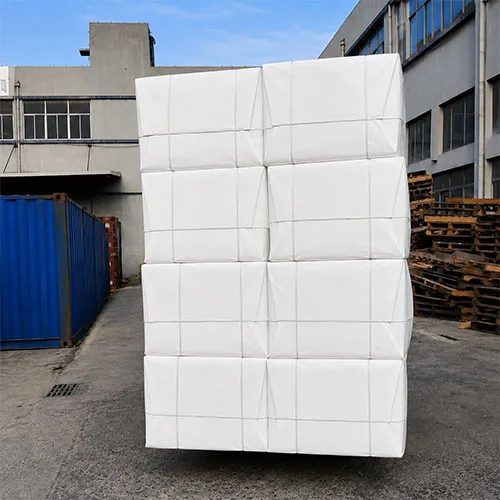
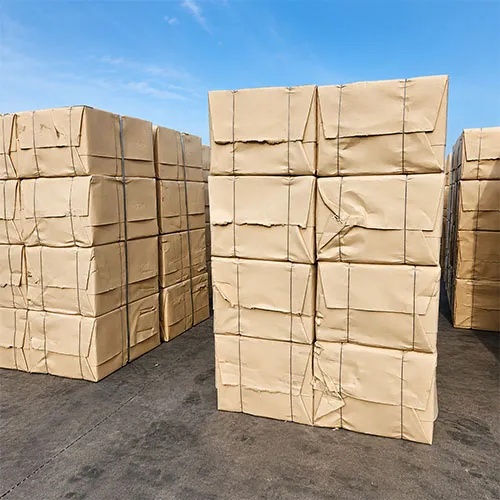
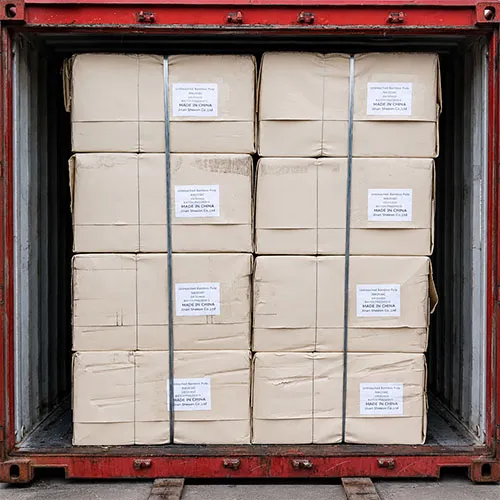
After the pulp reaches the appropriate condition for shipment, market pulp can be formed into sheets, dewatered, pressed, dried, cut, stacked, and baled. Exact equipment and delivery format vary by mill and customer requirement.
Drying turns wet pulp into a material that is easier to store, transport, export, and repulp at the buyer’s paper mill.
The moisture level needs careful control. Too much moisture can affect commercial weight, storage stability, and shipping. Excessive drying or poor bale handling can also influence repulping behavior and logistics efficiency.
This is where bamboo pulp becomes a globally tradable industrial raw material rather than simply wet fiber slurry.
After delivery, the paper manufacturer repulps the fiber, adjusts the furnish, performs application-specific refining when necessary, adds papermaking chemicals, forms the paper web, presses it, dries it, and completes the required finishing operations.
So if the broader question is “how is paper made?”, bamboo pulping is the raw-material preparation stage that comes before the customer’s actual paper making process.
Bamboo pulp can then become:
You can see more downstream examples in our guide to bamboo pulp uses in paper and packaging production.
What gets checked: Final pulp moisture, bale or sheet weight, brightness for bleached grades, dirt or cleanliness, viscosity where specified, fiber-related properties, and other agreed technical parameters.
Strength properties such as tensile, tear, or burst may also be evaluated using laboratory handsheets when required, although the exact items shown on a certificate of analysis depend on the product specification and supplier quality system.
For a B2B buyer, the key document is the batch-specific certificate of analysis or agreed quality report, rather than relying only on a general product-page specification.
At Sheeon Pulp, we recommend comparing the actual grade specification, sample performance, packing, batch consistency, and application fit before confirming recurring volume.
Many pages explaining how to make bamboo pulp reduce the process to something like: “harvest bamboo, cook it, bleach it, and make paper.”
That summary is easy to understand, but it leaves out the stages where industrial pulp quality is actually controlled.
Washing, screening, cleaning, delignification control, bleaching control, moisture management, and final quality inspection can all affect whether the pulp works properly in commercial paper production.
That difference matters to a purchasing manager.
A bamboo pulp supplier is not only supplying fiber. The buyer is purchasing a controlled raw material that must perform repeatedly in a paper machine, tissue line, packaging plant, or molded-fiber operation.
Consider two bamboo pulp samples that look almost identical.
One may have:
The other may vary significantly from batch to batch.
The purchase price may differ only slightly, but the effect on machine efficiency, waste rate, sheet breaks, paper quality, and finished-product claims may be much larger.
This is why bamboo pulp price and bamboo pulp prices should always be viewed in the context of specification consistency and total production cost.
For pulp importers, distributors, paper mills, tissue producers, and bamboo paper manufacturers, stable repeat supply is often more important than finding the lowest spot-market price.
A common misunderstanding is that unbleached bamboo pulp is simply an unfinished version of bleached bamboo pulp.
It is not.
Unbleached bamboo pulp can be a complete commercial product designed for an application that does not require high brightness. It still needs controlled cooking, washing, screening, cleaning, dewatering or drying, quality testing, and packing.
It simply does not go through the same full bleaching sequence as bleached bamboo pulp.
That can make it suitable for products such as:
Bleached grades are more likely to be selected for applications where brightness and visual cleanliness are important, including white tissue, printing and writing papers, and other lighter-colored bamboo papers.
This means the buyer should choose between bleached and unbleached pulp based on the finished product—not based on the assumption that one is “finished” and the other is not.
The same principle applies to virgin bamboo pulp. The word “virgin” describes the fiber source rather than automatically defining brightness, refining level, or final-paper performance.
A procurement team therefore needs the complete specification.
For additional grade-selection context, see our complete bamboo pulp guide for paper manufacturers.
For international procurement, we also recommend giving the supplier your final application, required quantity, target specifications, shipment destination, certification requirements, and preferred packing format.
Sheeon Pulp supports paper manufacturers, packaging producers, tissue converters, importers, distributors, eco-friendly material brands, and industrial raw-material purchasers looking for stable bulk bamboo pulp supply.
The more clearly you define your production target, the easier it is to compare grades based on actual manufacturing value rather than keyword-level product descriptions.
A: There is no single reliable industry-wide production time. It varies with bamboo preparation, digester design, cooking method, washing and screening configuration, bleaching sequence, mill capacity, drying equipment, quality testing, and whether the product is bleached or unbleached. For B2B purchasing, ask the supplier for the actual production and delivery schedule for your grade and volume rather than relying on a generic estimate.
A: The main chemical pulp stages—raw-material preparation, cooking, washing, screening, optional bleaching, and drying—are broadly similar, but bamboo and wood do not behave identically. Bamboo species have different fiber dimensions, chemical composition, ash and silica levels, and pulping behavior. This is why a paper mill evaluating virgin wood pulp vs bamboo pulp should run furnish and paper-machine trials rather than assume bamboo is a direct one-to-one replacement. Bamboo has nevertheless been widely studied as a useful non-wood fiber raw material for paper production.
A: Bleached pulp requires additional delignification or bleaching stages, chemicals, washing, energy, process control, and testing. These steps can add manufacturing cost. However, bamboo pulp price also depends on bamboo raw material, pulp yield, grade specifications, moisture, packing, certification, order volume, logistics, and market conditions. Buyers should therefore compare equivalent grades rather than assuming every unbleached pulp will always be cheaper than every bleached grade.
A: A mill can design its production system so that pulp from common upstream stages such as cooking, washing, and screening is directed into different downstream routes. One stream may enter bleaching while another is finished as an unbleached grade. However, once market pulp has been produced and dried to a specific specification, changing it into another commercial grade is not simply a matter of relabeling the same batch. The exact split point and sequence depend on the mill’s process design.
The step-by-step breakdown above explains the main bamboo pulping, bamboo pulp making, and paper pulp manufacturing stages used to turn bamboo into an industrial raw material for the paper industry. It also shows why the answer to “how is bamboo pulp made?” matters commercially: every stage influences cleanliness, fiber performance, brightness, consistency, cost, and the way the pulp behaves in the customer’s paper production process.
For paper mills and manufacturers producing bamboo paper, bamboo pulp paper, tissue, printing paper, packaging, or other eco-friendly paper products, the best purchasing decision is therefore not based on the words “bamboo pulp” alone.
It should be based on grade + specification + sample performance + batch consistency + supply reliability + total cost.
If you are evaluating bamboo pulp suppliers for a new or recurring project, send Sheeon Pulp your target paper product, bleached or unbleached requirement, technical specifications, monthly or annual volume, packing requirements, and destination market. We can help match a suitable bamboo pulp grade to your production needs and support sample evaluation, customized sourcing, bulk supply, and international export coordination.
Sheeon Pulp Technical Team | Corporate Technical Team | Published: September 2026 Bamboo pulping is the industrial process that converts bamboo into paper-grade fiber for bamboo paper, tissue, printing paper, packaging paper, molded fiber products, and other applications in the pulp and paper industry. For buyers asking how bamboo pulp is made, the process involves […]
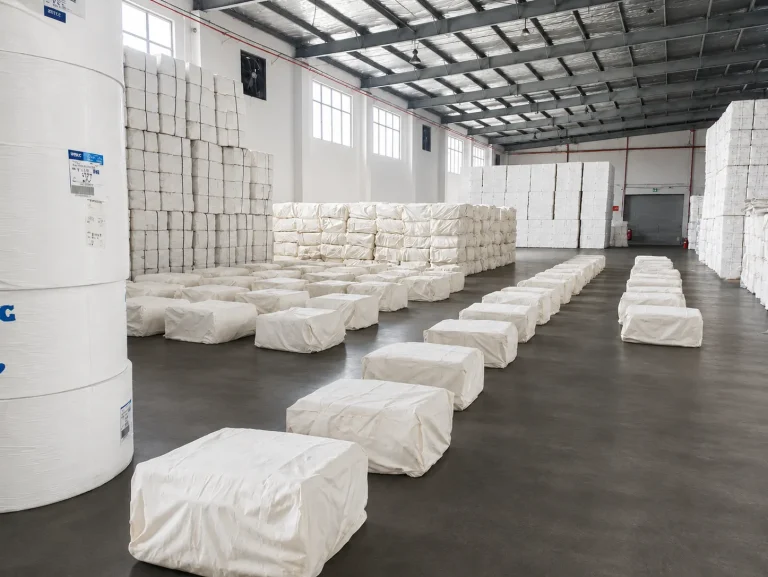
Bamboo pulp fiber is the cellulose fiber extracted from bamboo stalks through pulping and bleaching, used as a wood-pulp alternative in paper, packaging, and molded-fiber production. Fiber length, tensile index, and tear index, not brightness alone, determine how a given bamboo pulp grade performs on a paper machine.