bagasse pulp
Learn More


 15:10
Sheeon Pulp Technical Team | Technical Content, Jinan Sheeon Co., Ltd. | Published: November 3, 2026
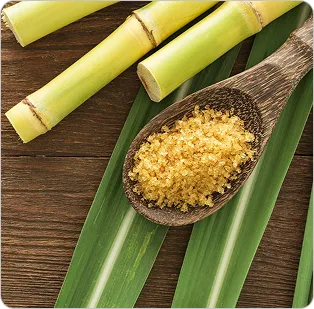
Bagasse pulp is made from the fibrous residue left after sugarcane is crushed for juice. The bagasse is depithed, stored, cleaned, then cooked with alkaline chemicals to free the cellulose fibers. The pulp is washed, screened, optionally bleached, then formed into sheets, dried and baled for shipment to paper and molded fiber mills.
Bagasse arrives as a mix of two very different materials. One is the useful fiber from the cane stalk’s rind and vascular bundles. The other is pith, a spongy, non-fibrous tissue that soaks up cooking chemicals, holds water, and drags down drainage on the paper machine.
That mix explains most of the process. Compared with typical wood-based chemical pulp lines, a bagasse line skips debarking and chipping but adds two jobs wood mills don’t face: separating pith from fiber, and storing a seasonal raw material for months so the mill can run after the cane harvest ends.
Each stage below includes a Check line: the thing a mill measures or inspects to confirm the stage did its job before material moves on.
Receive bagasse from the sugar mill.
Bagasse leaves the cane crushers wet and warm. Pulp mills either sit next to a sugar mill or truck the material in.
Check: Incoming loads are inspected for moisture, foreign matter (soil, stones, plastic) and signs of early fermentation such as darkening or a sour smell.
Run first-stage (moist) depithing.
Mechanical depithers break up the bagasse and screen out the fine pith fraction while it is still moist, usually at or near the sugar mill.
Check: The reject stream should be mostly fine pith; long fiber showing up in rejects means the depither is losing usable material.
Store the bagasse.
Because cane is harvested seasonally, mills stockpile depithed bagasse in bales or bulk piles, often kept wet to slow fermentation and color loss.
Check: Stored material is sampled for discoloration and degradation. Badly stored bagasse produces darker, weaker pulp and needs more chemicals downstream.
Wet-clean and depith again.
Before cooking, bagasse is slurried in water. This second pass removes sand, dirt and remaining pith.
Check: Sand and grit in the cleaned stock should be low enough not to damage equipment or show up as dirt specks later.
Cook the fiber (chemical pulping).
The cleaned bagasse goes into a digester with an alkaline cooking liquor under heat and pressure. Soda, soda-anthraquinone and kraft processes are all used for bagasse; the liquor dissolves lignin and frees individual fibers.
Check: The lab measures the kappa number of a cooked sample against the mill’s target for that grade. Pulp headed for bleaching and pulp sold unbleached may be cooked to different targets.
Wash the pulp and recover the liquor.
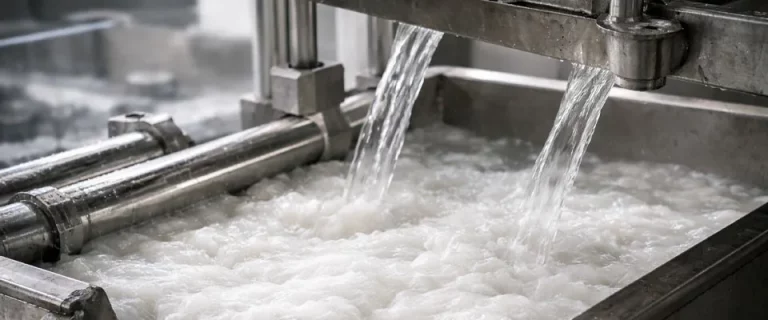
Washers separate the fibers from spent cooking liquor (black liquor), which goes to chemical recovery or treatment.
Check: Residual liquor carried over with the pulp is kept low, since it raises bleaching chemical demand and affects pH in the final sheet.
Screen and clean.
Pressure screens and centrifugal cleaners remove uncooked fiber bundles (shives), remaining grit and dirt particles.
Check: Dirt count. This stage largely decides whether the finished pulp meets a limit such as <35 mm²/500 g in the 0.3–5.0 mm² range.
Bleach (bleached grades only).
Unbleached pulp skips this step. Bleached grades go through a multi-stage sequence, commonly chlorine-dioxide-based (ECF) or oxygen and peroxide-based (TCF).
Check: Brightness. Sheeon’s bleached bagasse pulp is specified at >80%, against 40–43% for the unbleached grade.
Form, press, dry, cut and bale.
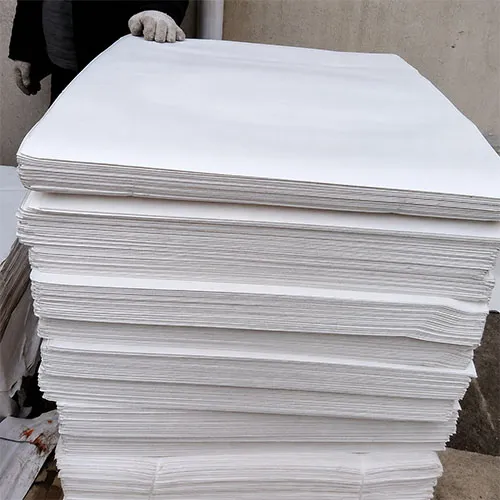
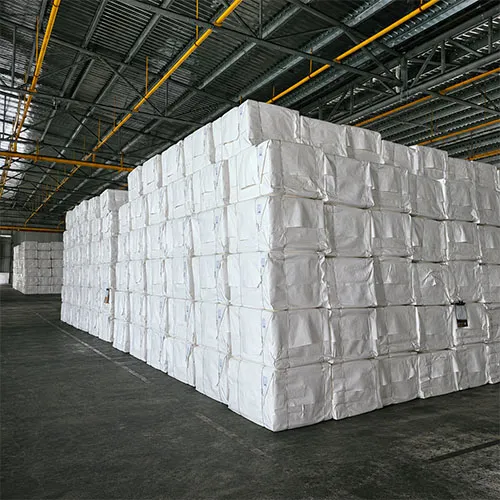
The pulp is formed into a continuous web on a pulp machine, pressed, dried, cut into sheets and stacked into bales for export.
Check: Moisture, sheet dimensions and bale weight are verified, then lot samples go to the lab for release testing against the product specification.
A spec sheet is the end product of all nine stages. When a number drifts out of range, this table points to where the problem most likely started.
| Spec parameter | Stage(s) with the most influence | What goes wrong if it’s off |
| Brightness | 3 (storage), 5 (cooking), 8 (bleaching) | Poorly stored bagasse or under-cooked pulp needs more bleaching to reach target |
| Dirt count | 2, 4 (depithing, cleaning), 7 (screening) | Visible specks in finished paper or molded products |
| Tensile / burst / tear index | 5 (cooking), 3 (storage) | Over-cooking or degraded fiber lowers strength |
| Viscosity | 5 (cooking), 8 (bleaching) | Low viscosity points to cellulose damage from harsh cooking or bleaching |
| Ash | 2, 4 (pith and sand removal) | High ash usually means grit or pith wasn’t fully removed |
| Moisture | 9 (drying) | Affects shipped weight and storage behavior |
| pH | 6 (washing), 8 (bleaching) | Can interfere with the buyer’s wet-end chemistry |
Both grades below start from the same raw material, sugarcane bagasse. The difference is whether step 8 happens. These are the published figures from Sheeon’s product pages:
| Parameter | Bleached Bagasse Pulp | Unbleached Bagasse Pulp |
| Brightness | >80% | 40–43% |
| Dirt count, 0.3–5.0 mm² | <35 mm²/500 g | <40 mm²/500 g |
| Dirt count, >5.0 mm² | None | None |
| Tensile index | >55 N·m/g | Not published |
| Tear index | >5.0 mN·m²/g | Not published |
| Burst index | >4.0 kPa·m²/g | Not published |
| Viscosity | >550 cm³/g | Not published |
| Fiber wet weight | >1.7 g | Not published |
| Ash | <0.7% | Not published |
| Moisture | <15% | 14 ± 2% |
| pH | 6.5–8.0 | <8.0 |
| Beating degree | 22°SR | 18°SR |
| Basis weight | Not published | 500–530 g/m² |
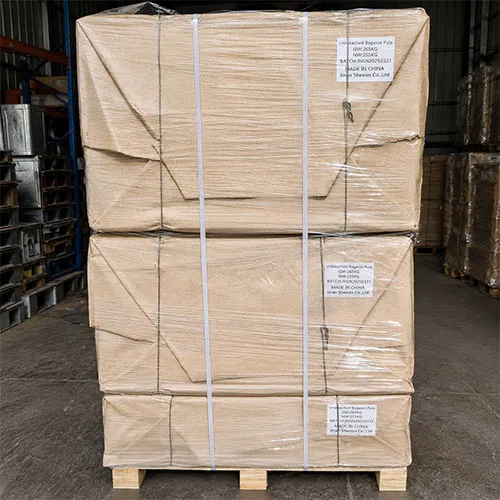
| Format | Sheet size 700 × 800 mm | Bale 700 × 800 × 600 mm; 250 kg ADMT |
The bleached grade’s product page references Chinese national and industry test methods including GB/T 7974 (brightness), GB/T 10740-1989 (dirt and shives), GB/T 1548 (viscosity), GB/T 742 (ash), GB/T 3332-2004 (beating degree), GB/T 8940.2 (laboratory handsheet preparation for strength testing), GB/T 8944.1 and QB/T 3704. The unbleached page does not list test methods, so ask for them alongside any certificate of analysis.
Pricing for both grades is available on request. It depends on grade, specification, order volume, packaging and delivery requirements.
“Bleached and unbleached pulp use different bagasse.” They don’t. The divergence happens late, at bleaching. That’s why a supplier can often offer both from one line, and why the unbleached grade’s brown color reflects residual lignin rather than a lower-grade input.
“18°SR means the pulp is under-processed.” Beating degree on a market pulp spec describes the pulp as shipped. Receiving mills normally refine pulp to their own target freeness for the product they make, so a lower as-shipped °SR isn’t a quality defect. It’s a starting point you plan your refining around.
Edge case: food-contact end uses
If the pulp will become tableware, cups or food packaging, the process description above won’t answer your compliance question. Two points matter:
Sheeon’s bagasse pulp pages present CE, FDA-related food-contact and SGS claims, but the pages don’t disclose certificate numbers or report numbers. Request the underlying documents, matched to the exact grade, before you place an order for a food-contact application.
Where bagasse pulp works well
Where it falls short
Most readers researching this process are evaluating suppliers rather than building a mill. If that’s you, four requests turn the process knowledge above into a usable comparison:
Q: What chemicals are used to cook bagasse into pulp?
A: Alkaline cooking liquors are standard. Soda, soda-anthraquinone and kraft processes are all used for bagasse. The choice affects yield, strength and how the mill recovers chemicals, so ask any supplier which process their line uses.
Q: Why does bagasse need depithing when wood doesn’t?
A: Pith is a spongy, non-fibrous tissue that absorbs cooking chemicals, holds water and slows drainage. Wood chips don’t contain it. Removing pith before cooking lowers chemical demand and improves the cleanliness and runnability of the finished pulp.
Q: What’s the difference between bagasse pulp sheets and bales?
A: Pulp is dried as a continuous web, cut into sheets and stacked into bales for shipping. Sheeon’s bleached grade lists a 700 × 800 mm sheet size; the unbleached grade lists 700 × 800 × 600 mm bales at 250 kg ADMT.
Q: How much does bagasse pulp cost?
A: Sheeon prices bagasse pulp on request. The quote depends on grade (bleached or unbleached), specification, order volume, packaging and delivery terms.
Bagasse pulp is fiber made from sugarcane bagasse, the residue left after juice extraction. Sheeon offers a bleached grade with brightness above 80% and an unbleached grade at 40–43%. Choose by brightness target, cleanliness limits and strength data, then verify certificates and test samples before committing to volume. What sugarcane bagasse pulp is Sugarcane bagasse […]

Bamboo paper is made from bamboo fiber; tree paper is made from wood pulp. Neither wins outright, because performance depends on the pulp grade. Sheeon’s bleached bamboo pulp publishes brightness near 85% and fiber length above 1.7 mm, which gives buyers fixed numbers to test any virgin wood pulp against. Where the fibers come from […]