целлюлоза из багассы
Узнать больше


 08:36
08:36 Техническая группа Sheeon Pulp | Корпоративная техническая группа | Опубликовано: сентябрь 2026 г.
Волокно бамбуковой целлюлозы — это целлюлозное волокно, получаемое из стеблей бамбука в процессе варки и отбеливания, которое используется в качестве альтернативы древесной целлюлозе при производстве бумаги, упаковки и формованного волокна. Именно длина волокон, показатель прочности на разрыв и показатель сопротивления разрыву, а не только белизна, определяют эксплуатационные характеристики того или иного сорта бамбуковой целлюлозы на бумагоделательной машине.
Бамбуковая целлюлоза starts as bamboo stalk material, which is cooked and refined into a fiber suitable for papermaking. Sheeon produces two grades from this raw material: Bleached Bamboo Pulp and Unbleached Bamboo Pulp. The bleached grade goes through additional processing to raise brightness for white paper, tissue, and printing applications. The unbleached grade retains most of its natural color and is typically routed toward packaging or molded-fiber uses where brightness matters less than mechanical strength and cost.
Unlike a single blended commodity pulp, each grade carries its own fiber length, strength index, and dirt count range, which is why buyers comparing bamboo pulp to wood pulp need the individual product sheet rather than a general industry description.
A pulp buyer evaluating runnability on an existing paper machine typically checks four figures before anything else:
1.Fiber length — longer fiber generally supports a stronger sheet network, but only within a range the existing machine settings can handle without refining adjustments.
2.Tensile index — how much pulling force the resulting sheet withstands per unit of basis weight, expressed in N·m/g.
3.Tear index — resistance to tearing once a small cut or defect starts propagating, expressed in mN·m²/g.
4.Burst index — resistance to a sheet rupturing under pressure, expressed in kPa·m²/g, relevant for packaging-grade paper and molded fiber trays.
Viscosity is a secondary but still practical figure: it correlates with how much the fiber’s cellulose chains have degraded during cooking and bleaching, and low viscosity outside a mill’s normal range can signal a pulp batch that behaves differently in beating than the buyer’s prior shipments.
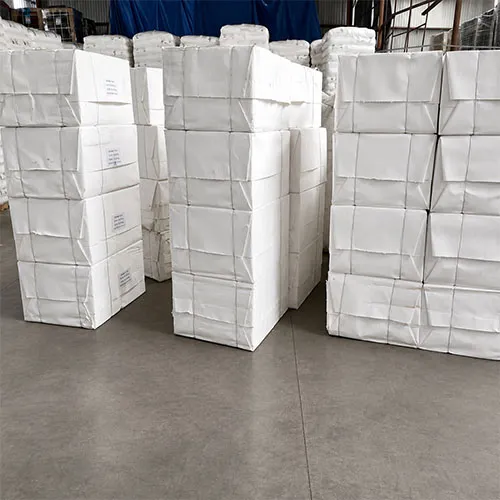
| Параметр | Отбеленная бамбуковая целлюлоза | Неотбеленная бамбуковая целлюлоза |
| Яркость | approximately 85% | 40–43% |
| Длина волокна | >1,7 мм | >2,2 мм |
| Показатель растяжения | >55 Н·м/г | >50 Н·м/г |
| Индекс разрыва | >8,5 мН·м²/г | >8,0 мН·м²/г |
| Индекс серий | >5,0 кПа·м²/г | >4,5 кПа·м²/г |
| Вязкость | 600–800 мл/г | not published |
| Количество загрязнений, 0,3–1,0 мм² | <25 мм²/500 г | <35 мм²/500 г |
| Количество загрязнений, 1,0–4,0 мм² | <20 мм²/500 г | <35 мм²/500 г |
| Количество загрязнений, >4,0 мм² | Нет | Нет |
| Referenced test methods | GB/T 8940.2, GB/T 10740, GB/T 7982, GB/T 1548, GB/T 10336-2002 | GB/T 8940.2, GB/T 10740, GB/T 7982, GB/T 1548, GB/T 10336-2002 |
Compared with generic wood-pulp data sheets that often list only brightness and moisture, this level of detail, dirt count broken out by particle-size class and tear, tensile, and burst indices reported separately, gives a mill more to check against its own runnability requirements before requesting a sample.
A common assumption is that a longer minimum fiber length should produce a higher minimum tear index, since longer fibers are usually associated with better tear resistance in general papermaking theory. The published ranges above don’t follow that pattern. Неотбеленная бамбуковая целлюлоза carries the longer minimum fiber length, at >2.2 mm against >1.7 mm for the bleached grade, yet its minimum tear index is lower, at >8.0 mN·m²/g against >8.5 mN·m²/g.
This isn’t necessarily a contradiction. Bleaching changes fiber surface chemistry and bonding potential in ways that can offset a shorter average fiber length, and the figures here are minimum thresholds rather than a controlled side-by-side study of the same fiber batch before and after bleaching. The practical takeaway for a buyer: don’t assume fiber length alone predicts strength performance across bleached and unbleached grades of the same raw material. Request the tear and tensile figures directly rather than inferring them from fiber length.
Advantages: The bleached grade’s tear index minimum of >8.5 mN·m²/g is higher than some conventional pulp benchmarks used for similar packaging applications, and bamboo as a raw material regenerates faster than many wood sources used for comparable pulp. Dirt count is published across two particle-size bands rather than a single blended figure, which gives a QC team a finer basis for acceptance testing.
Limitations: Unbleached brightness at 40–43% sits well below what’s usable for white paper without further processing, so buyers targeting finished brightness above that range need to budget for their own bleaching step or order the bleached grade directly. Certificate numbers for CE, FSC, and SGS claims aren’t published, which means procurement teams working under an audit requirement will need a direct document request as a standard part of onboarding a new bamboo pulp order, not an optional extra step.
A: Sheeon’s published figures show a minimum of >1.7 mm for Отбеленная бамбуковая целлюлоза and >2.2 mm for Unbleached Bamboo Pulp. These are minimum thresholds from the product specification, not a fixed average.
A: It depends on which index you’re checking. The bleached grade’s published tear index minimum (>8.5 mN·m²/g) and tensile index minimum (>55 N·m/g) are both higher than the unbleached grade’s (>8.0 mN·m²/g and >50 N·m/g respectively), even though the unbleached grade has the longer minimum fiber length.
A: The product pages reference FDA-related food-contact compliance, but no certificate or authorization number is published. FDA food-contact status can be substance- and use-specific, so this should be confirmed with documentation for your specific application rather than treated as a blanket certification.
A: Pricing depends on grade, specification, order volume, packaging, and delivery terms, and is provided on request rather than published as a fixed range.
If your current supplier’s spec sheet doesn’t break out tear and burst index by grade, that’s a reasonable next question to raise before your next sample order, along with which GB/T method backs each figure.
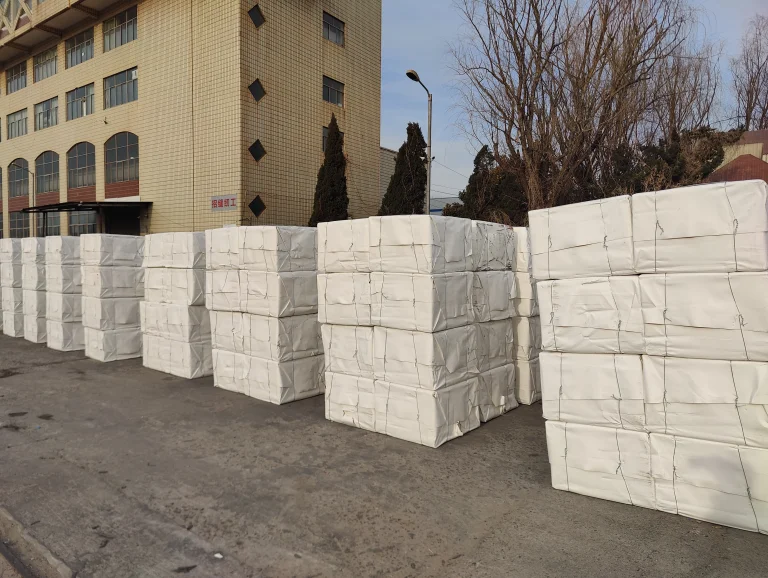
Бамбуковая бумага — это бумага, изготовленная полностью или частично из бамбуковой целлюлозы, поэтому при её покупке необходимо выбрать сорт целлюлозы. Компания Sheeon выпускает отбеленную бамбуковую целлюлозу с яркостью около 85% и длиной волокон более 1,7 мм, а также неотбеленную — с яркостью 40–43% и длиной волокон более 2,2 мм.

Бамбуковая бумага — это бумага, изготовленная полностью или частично из бамбуковой целлюлозы, поэтому при её покупке необходимо выбрать сорт целлюлозы. Компания Sheeon выпускает отбеленную бамбуковую целлюлозу с яркостью около 85% и длиной волокон более 1,7 мм, а также неотбеленную — с яркостью 40–43% и длиной волокон более 2,2 мм.