bagasse pulp
Learn More


 13:55
13:55 Sheeon Pulp Technical Team | Technical Content Team | Published: August 20, 2026
Bleached bagasse pulp is sugarcane-fiber pulp processed to remove color and lignin residue, typically reaching brightness above 80%. It’s used in molded fiber tableware, food packaging board and printing-grade paper where a white base sheet and food-contact suitability both matter.
Most marketplace listings for bleached bagasse pulp stop at brightness and gram weight. That’s enough to compare price tags, but not enough to know whether a pulp lot will run cleanly through a molding line or hold up under wet-strength testing. Brightness measures whiteness, not fiber strength — a batch can hit 80%+ brightness and still underperform on tear resistance if the bleaching process degraded fiber length.
For Sheeon’s bleached bagasse pulp, the published brightness threshold is >80%, alongside separate — and independently important — figures for dirt count, tensile index, tear index and burst index. Treating any single number as a stand-in for overall quality is the first mistake buyers make when comparing suppliers off a summary spec.
| Parameter | Value | Test Method |
| Brightness | >80% | GB/T 8940.2 |
| Dirt count, 0.3–5.0 mm² | <35 mm²/500 g | GB/T 7974 |
| Dirt count, >5.0 mm² | None | GB/T 7974 |
| Tensile index | >55 N·m/g | GB/T 10740-1989 |
| Tear index | >5.0 mN·m²/g | QB/T 3704 |
| Burst index | >4.0 kPa·m²/g | GB/T 1548 |
| Viscosity | >550 cm³/g | GB/T 742 |
| Fiber wet weight | >1.7 g | GB/T 8944.1 |
| Ash | <0.7% | GB/T 3332-2004 |
| Moisture | <15% | — |
| pH | 6.5–8.0 | — |
| Sheet size | 700 × 800 mm | — |
| Beating degree | 22°SR | — |
Compared with the typical marketplace product page — which usually lists gram weight, MOQ and a price band and stops there — this covers the four values that actually predict runability: dirt count, tensile index, tear index and burst index.
Buyers sourcing for the first time sometimes assume “bleached” and “unbleached” are just a color choice. The spec sheet says otherwise.
| Parameter | Bleached Bagasse Pulp | Unbleached Bagasse Pulp |
| Brightness | >80% | 40–43% |
| Dirt count, 0.3–5.0 mm² | <35 mm²/500 g | <40 mm²/500 g |
| Beating degree | 22°SR | 18°SR |
| Moisture | <15% | 14 ± 2% |
| pH | 6.5–8.0 | <8.0 |
The lower beating degree on the unbleached grade means less fiber refining before use, which typically suits lower-cost molded packaging where surface whiteness isn’t a requirement. Bleached stock’s higher beating degree reflects the additional processing needed to reach printing- and food-packaging-grade brightness.
What works in bleached bagasse pulp’s favor:
Where it falls short for some buyers:
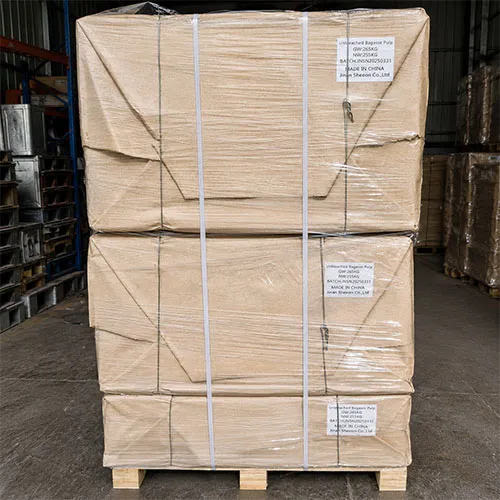
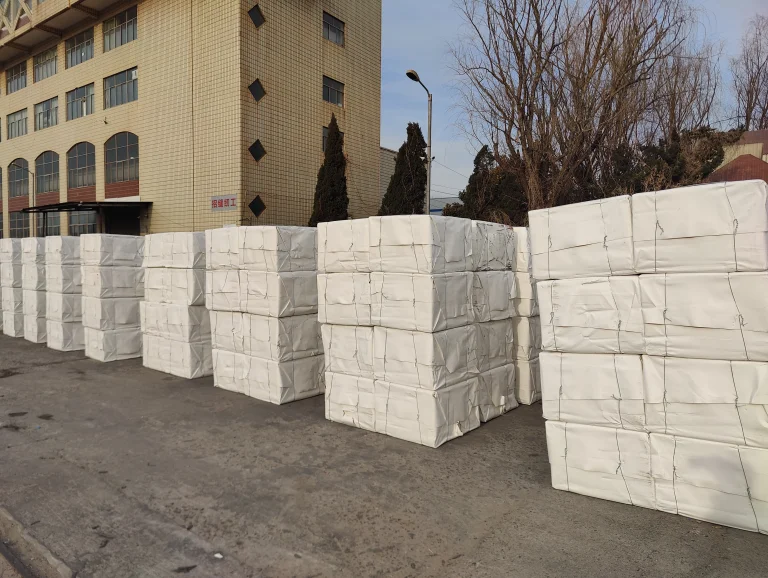
Bale weight and packaging format for the bleached grade are not published on the reviewed product pages (unlike the unbleached grade, which lists a 250 kg ADMT bale weight and defined bale dimensions); freight and container-loading planning may require a direct spec confirmation from Sheeon.
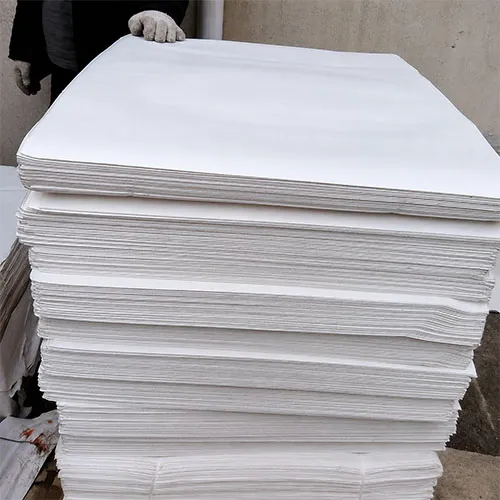
Sheeon states pricing depends on grade, specification, order volume, packaging and delivery requirements, without publishing a fixed price list. Buyers should request a quote against their specific tonnage and delivery terms rather than expect a published per-ton figure; no bagasse pulp price range is currently disclosed to cite here.
A: Sheeon’s bleached bagasse pulp is published at >80% brightness, against 40–43% for the unbleached grade — a roughly 40-point spread rather than a marginal difference.
A: 22°SR for bleached versus 18°SR for unbleached. The higher figure reflects additional fiber refining tied to the bleaching process, which affects how the pulp behaves when re-pulped for molding or paper forming.
A: Not on the reviewed product pages — only sheet size (700 × 800 mm) is listed. The unbleached grade publishes a 250 kg ADMT bale weight, which buyers can use as a reference point when requesting bleached-grade packaging specs directly.
What to check before requesting a quote: confirm whether the intended end use is food-contact (and therefore needs a matched certificate, not just a website claim) or non-food packaging, since that changes which documentation to request alongside the spec sheet.
Bamboo paper is paper made wholly or partly from bamboo pulp, so buying it means choosing a pulp grade. Sheeon publishes bleached bamboo pulp at about 85% brightness with fibers longer than 1.7 mm, and unbleached at 40–43% brightness with fibers longer than 2.2 mm.
Bamboo paper is paper made wholly or partly from bamboo pulp, so buying it means choosing a pulp grade. Sheeon publishes bleached bamboo pulp at about 85% brightness with fibers longer than 1.7 mm, and unbleached at 40–43% brightness with fibers longer than 2.2 mm.