bagasse pulp
Learn More


 10:39
Depithing is the mechanical separation of pith, the soft core tissue of sugarcane, from the longer fibers in bagasse before pulping. It matters because pith absorbs cooking chemicals, slows drainage on the paper machine and adds dirt specks, while contributing little strength to the finished pulp.
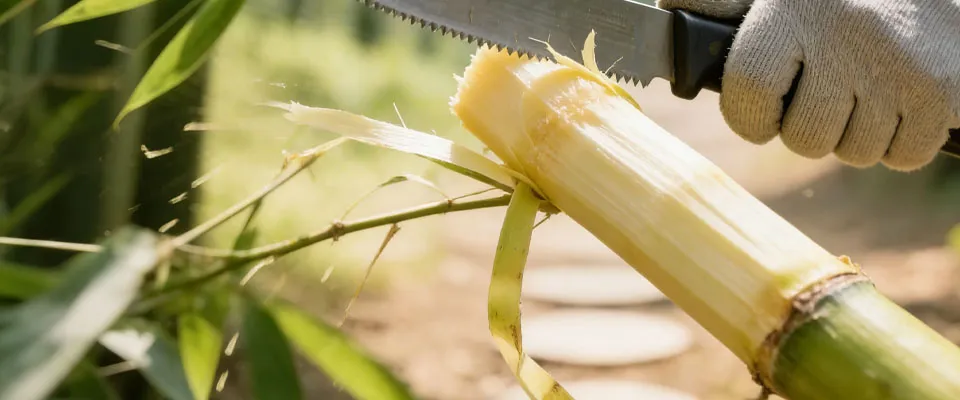
A crushed sugarcane stalk leaves two very different materials. One is the rind and vascular bundle fiber: long, strong, and the reason bagasse can be made into paper at all. The other is pith, made of parenchyma cells that once held the juice. Because these cells are elastic, they tend to draw air back in and recover their shape after the juice is pressed out, which is part of why pith behaves like a sponge in the digester.
Depithing is the step that pulls these two apart. The word is simply “de-” plus “pith.” In practice the removed stream is never pure pith; it also carries fiber fines, soluble matter and dust. One recent mill paper describes the main goal of depithing as freeing the fiber from solubles and pith fines, which is a more accurate picture than “removing the core.”
Compared with wood chips, which arrive at the pulp mill already debarked and need no equivalent separation step, bagasse brings its contaminant built into every particle. Depithing does for bagasse roughly what debarking does for logs, except the “bark” here is mixed through the whole material rather than sitting on the outside.
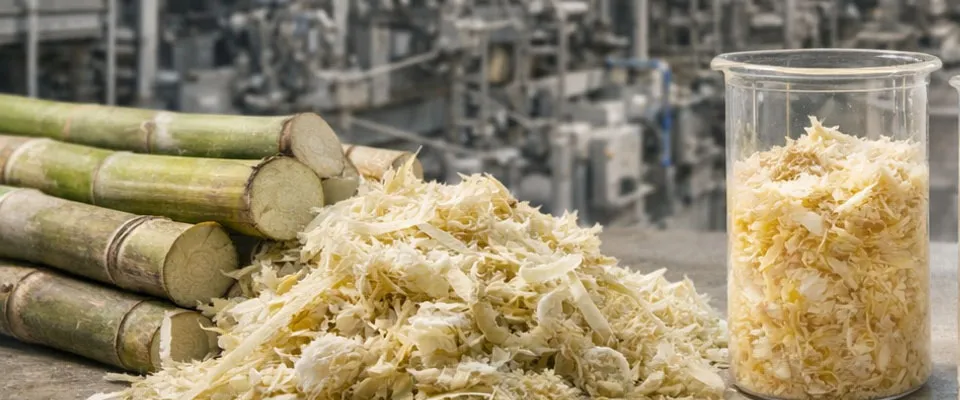
Pith does very little for sheet strength but takes a lot from the process. The clearest statement of the cost comes from a U.S. patent on wet depithing, which notes that removing the pith completely substantially reduces the liquor and steam used to process the bagasse fibers further.
What that means on a mill floor:
None of these is a cosmetic issue. A pulp with poor depithing upstream can pass a brightness test and still give a converter trouble on drainage time or visible specks in a molded product.
Joseph Atchison’s 1971 review, archived by the South African Sugarcane Research Institute, groups the many proposed methods into dry, moist and wet categories, plus combinations of them.
| Method | Bagasse condition | Where it usually happens | What it does well | Where it falls short |
| Moist (humid) | About 50% dry, as it leaves the sugar mill | Sugar mill, before storage | Takes out a large share of pith before it is stored or shipped | Leaves residual pith; not a final cleaning step |
| Dry | Dried in storage or artificially to 75–90% dry content | After storage | Works on baled bagasse that was stored dry | More fiber is lost with the pith, and the dust created affects air quality and operator health |
| Wet | Dilute suspension, roughly 2% to 12% consistency | Pulp mill, just before the digester | Removes sand and dirt as well as pith | Needs water handling and a dewatering step before cooking |
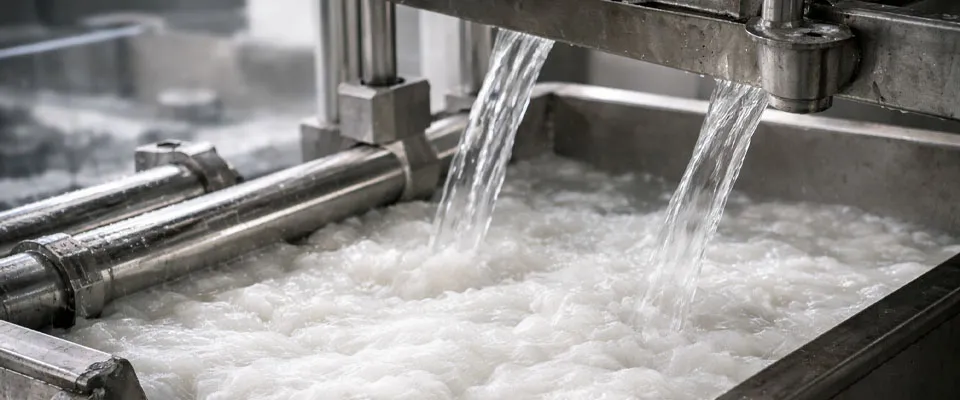
On the wet route, the washed fiber typically goes through a screw press to remove as much water as possible before entering the continuous digester. That press is one reason wet depithing adds equipment and energy, even though it gives the cleanest fiber.
Atchison’s review made a clear recommendation that still describes common practice. The preferred approach was a moist stage at the sugar mill (around 50% dryness) removing 25–35% of the bagasse weight, followed by a wet stage at the pulp mill (10–18% consistency) removing a further 10–12% of the remaining dry weight. The logic is economic: removing as much pith as possible at the sugar mill, while the bagasse is still about 50% dry, avoids storing and transporting it. The wet stage then does the final cleanup that the moist stage cannot.
Those percentages describe the weight leaving with rejects, not the pith content of bagasse itself. Rejects include fines and solubles.
1. “Depithing removes all the pith.”
A single moist stage does not. One patent notes that conventional moist depithing of bagasse at about 50% dryness removes roughly two-thirds of its pith. The remainder is why a wet stage exists.
2. “More aggressive depithing is always better.”
Rejects carry fiber with them. A depither patent states plainly that material losses during depithing are considerable. Past a certain point, extra separation buys a small gain in cleanliness for a real loss in yield, and the mill pays for that in raw material per ton of pulp.
3. “Shredding dry is a shortcut.”
It tends to backfire. When bagasse is shredded dry, both fiber and pith get shortened, which makes separating them difficult or impossible. The material that comes out is shorter fiber mixed with fragments that no screen can sort cleanly.
4. “Depithing only matters for bleached grades.”
Pith consumes cooking liquor whether or not the pulp is bleached afterward, and its effect on drainage carries into unbleached uses such as molded fiber. Unbleached pulp hides specks better visually; it does not hide slower forming or higher chemical demand.
Sheeon’s product pages do not describe which depithing route is used upstream, so we will not claim one here. What the pages do publish are the outcome measures where poor depithing would show. The figures below are taken from Sheeon‘s published specifications for its two bagasse grades.
| Parameter | Bleached Bagasse Pulp | Unbleached Bagasse Pulp | Why it relates to depithing |
| Dirt count, 0.3–5.0 mm² | <35 mm²/500 g | <40 mm²/500 g | Pith fragments and sand show up as specks |
| Dirt count, >5.0 mm² | None | None | Large particles point to poor screening |
| Beating degree | 22°SR | 18°SR | Pith and fines raise °SR and slow drainage |
| Ash | <0.7% | Not published | Sand and grit carried with pith add ash |
| Tensile index | >55 N·m/g | Not published | Fiber loss or pith content can lower strength |
| Brightness | >80% | 40–43% | Bleaching outcome; affected by residual specks |
| Moisture | <15% | 14 ± 2% | Handling and shipping parameter |
The bleached grade’s product page references Chinese standard test methods including GB/T 10740-1989 (pulp dirt measurement), GB/T 3332-2004 (beating degree by the Schopper-Riegler method) and GB/T 742 (ash).
What does depithing mean in papermaking?
It means separating the pith, the soft juice-bearing core cells of sugarcane, from the stronger fiber in bagasse before the material is cooked into pulp.
Can all the pith be removed from bagasse?
Not completely. A single moist stage removes a large share, and a second wet stage removes more, but each additional pass also takes usable fiber with it. Mills balance cleanliness against yield.
What happens to the pith after it is removed?
It is usually dewatered and burned for energy, often in the sugar mill’s own boilers, or dried for use as animal feed.
Is depithing needed for unbleached bagasse pulp used in molded fiber?
Yes. Pith still consumes cooking chemicals and affects drainage during forming, even if the finished product is not bleached. Dirt count and beating degree remain the parameters to check.
Bagasse pulp is fiber made from sugarcane bagasse, the residue left after juice extraction. Sheeon offers a bleached grade with brightness above 80% and an unbleached grade at 40–43%. Choose by brightness target, cleanliness limits and strength data, then verify certificates and test samples before committing to volume. What sugarcane bagasse pulp is Sugarcane bagasse […]

Bamboo paper is made from bamboo fiber; tree paper is made from wood pulp. Neither wins outright, because performance depends on the pulp grade. Sheeon’s bleached bamboo pulp publishes brightness near 85% and fiber length above 1.7 mm, which gives buyers fixed numbers to test any virgin wood pulp against. Where the fibers come from […]